
History Preserved: The Home Town Coolidge Club
By Tami Bowen
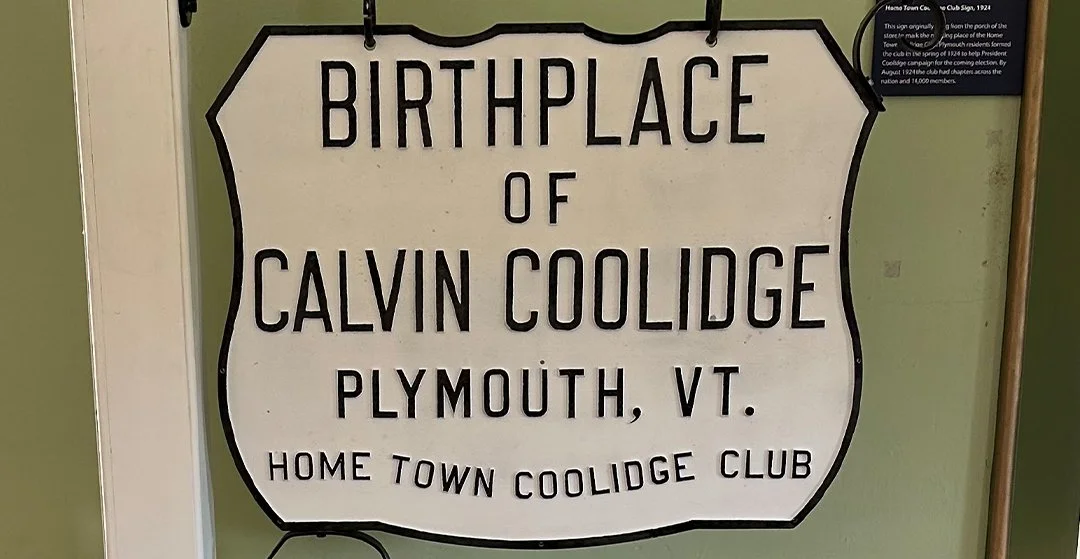
In the spring of 1924, a small Vermont village became the starting point for an ambitious political campaign. From Plymouth Notch, the birthplace and boyhood home of President Calvin Coolidge, local residents launched the Home Town Coolidge Club, an organization created to build national support for Coolidge as he sought election to the presidency in his own right.
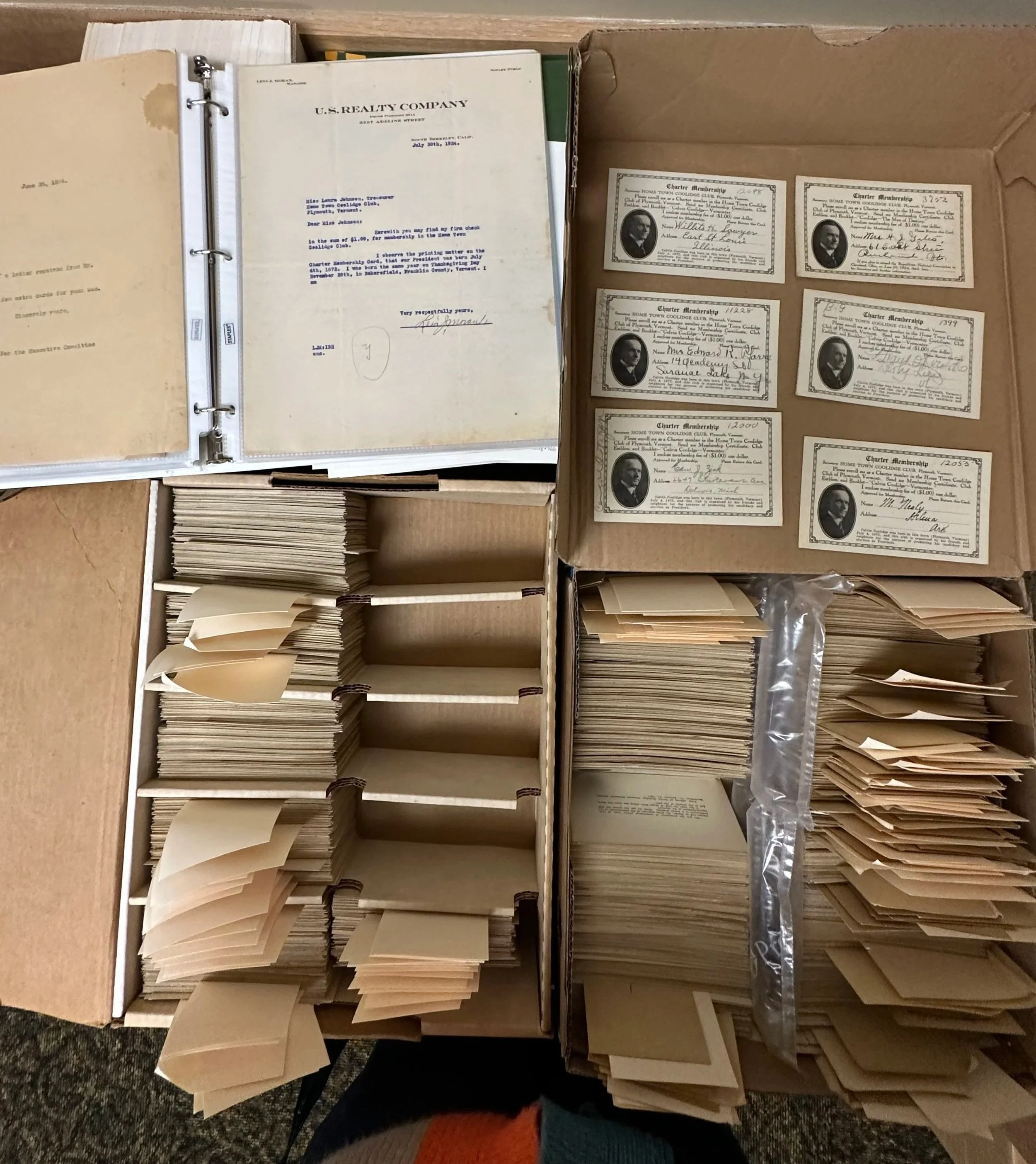
Today, more than a century later, the club’s surviving membership cards, letters, certificates, and campaign materials offer a glimpse into the personal connections and local enthusiasm that helped bring a presidential campaign to life. A remarkable collection of more than 3,000 membership cards and more than 100 letters, donated by Dr. Seth Usher of Parkland, Florida, provides a look at this national network of supporters.
A Campaign Begins in Plymouth Notch
The first meeting of the Home Town Coolidge Club was held on April 14, 1924, in Plymouth Notch. The meeting took place in the upstairs hall above the Cilley Store—the same building that was once owned by Calvin Coolidge’s father, John Coolidge, and where Calvin Coolidge was born.
Following the death of President Warren G. Harding, Calvin Coolidge was sworn in as president at his family home in Plymouth Notch during the early morning hours of August 3, 1923. His father administered the oath.
News of the unusual presidential inauguration brought thousands of visitors to the village. For many, a visit to Plymouth Notch became a personal connection to the new president and his Vermont roots.
The Home Town Coolidge Club built on that connection. The club used the names of the visitors who had come to see Coolidge’s Vermont home as one important source for its mailing list.
One Dollar to Join
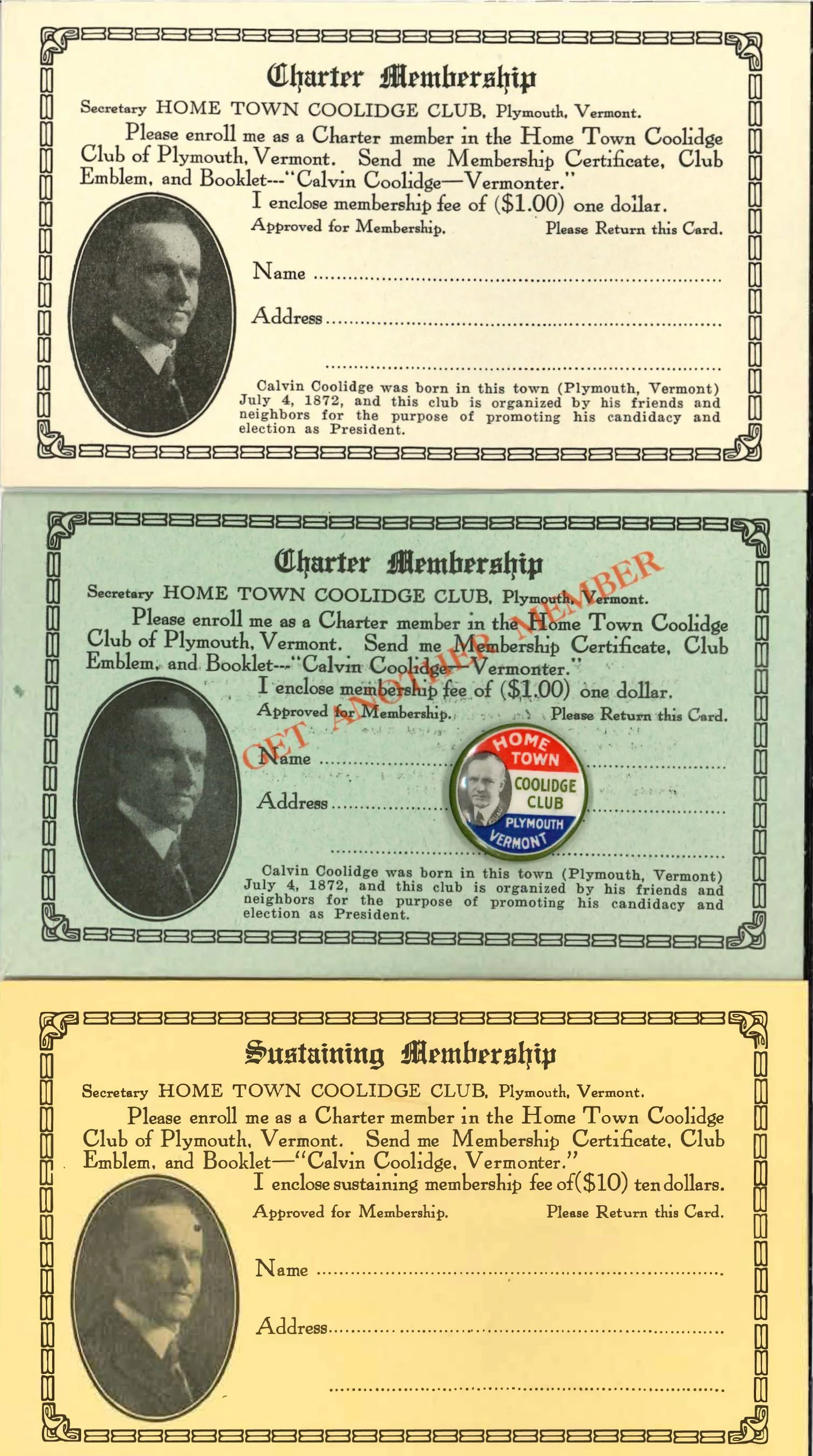
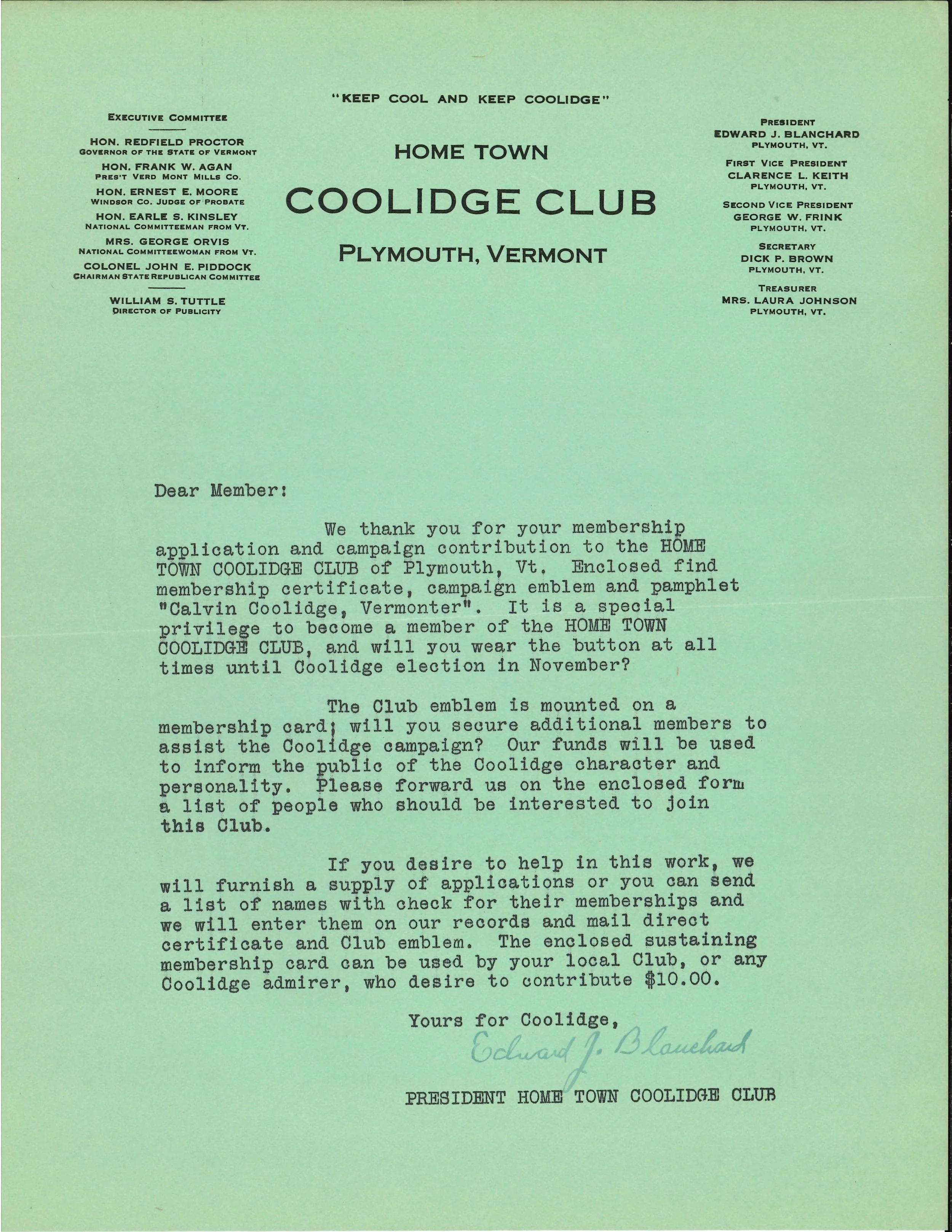
Membership in the club cost one dollar. Members received a collection of materials designed to connect them to Plymouth—and more importantly, to Calvin Coolidge. The membership packet included:
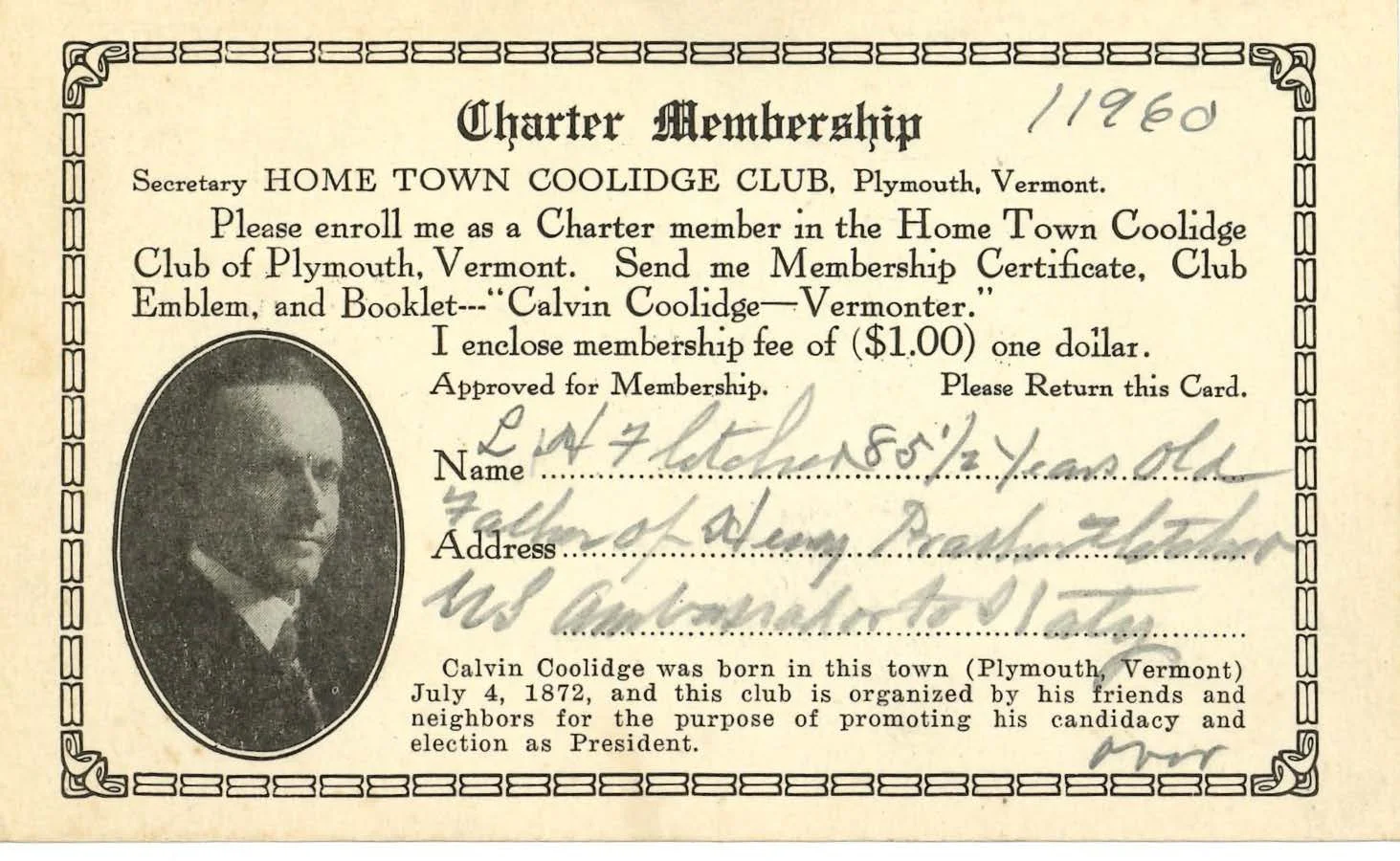
A Home Town Coolidge Club membership card
A letter from Edward Blanchard, president of the club
A certificate of membership
A copy of Calvin Coolidge: Vermonter, a booklet featuring an address by Earle S. Kinsley, Republican National Committeeman for Vermont
A copy of “Keep Cool and Keep Coolidge,” the club’s official campaign song
A campaign pin
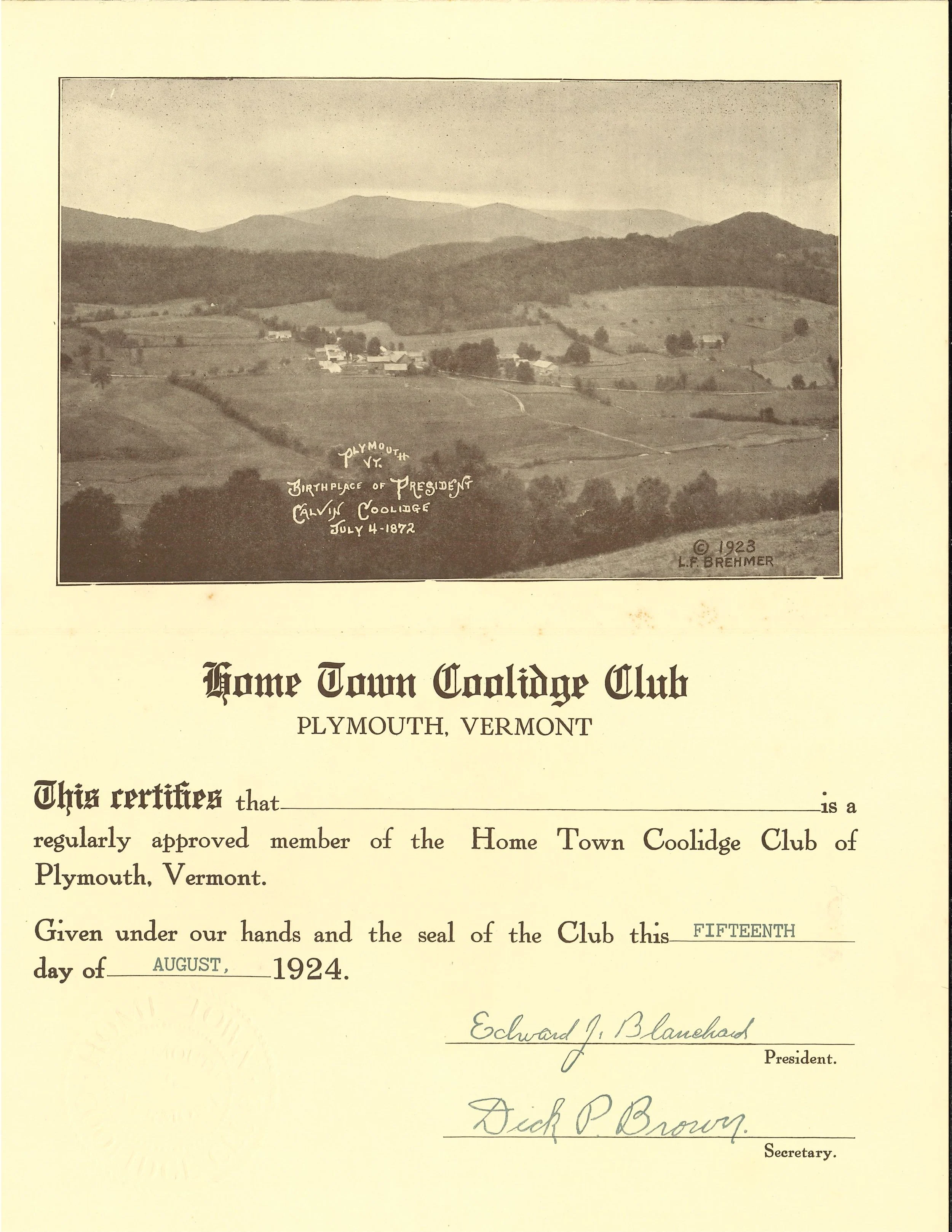
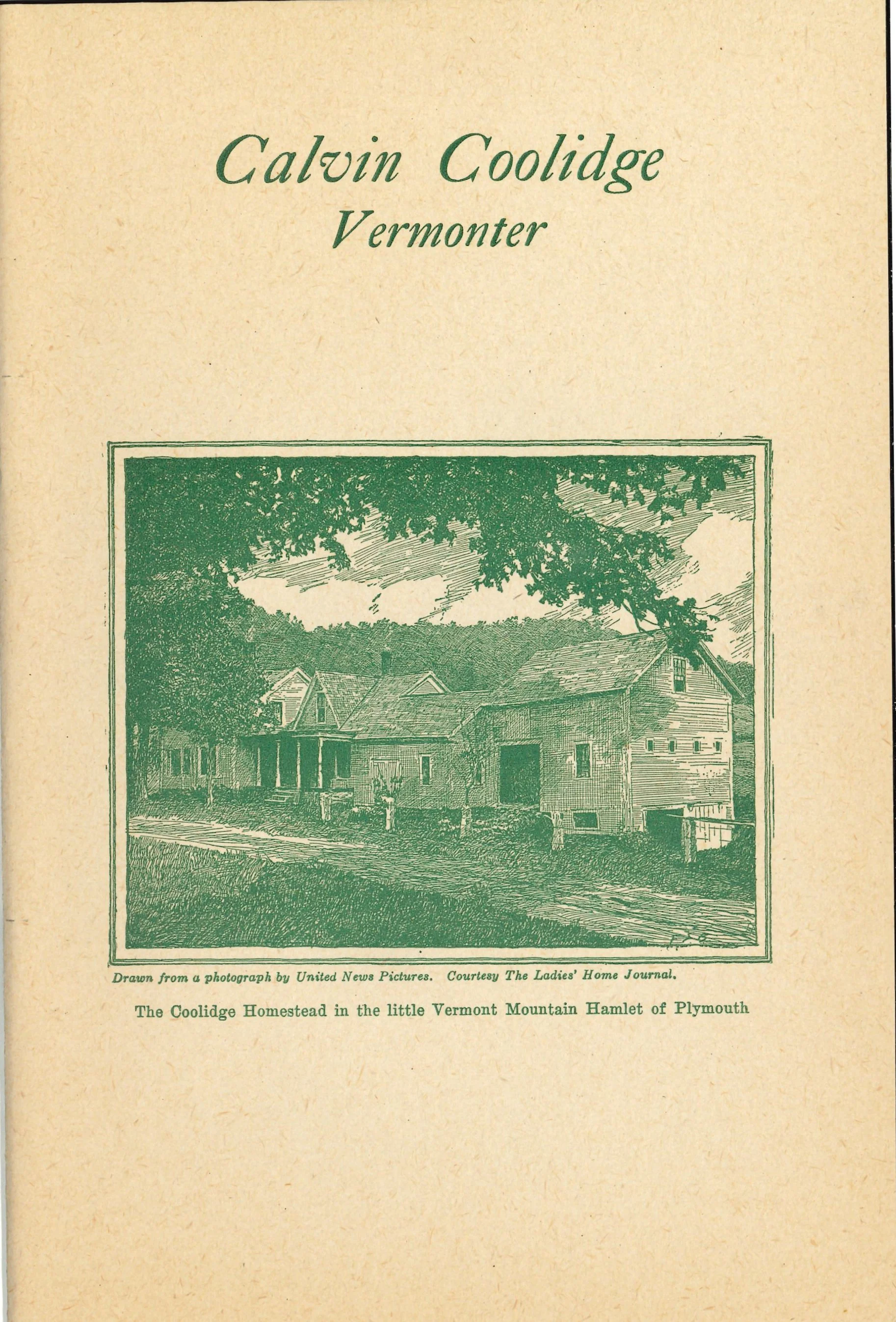
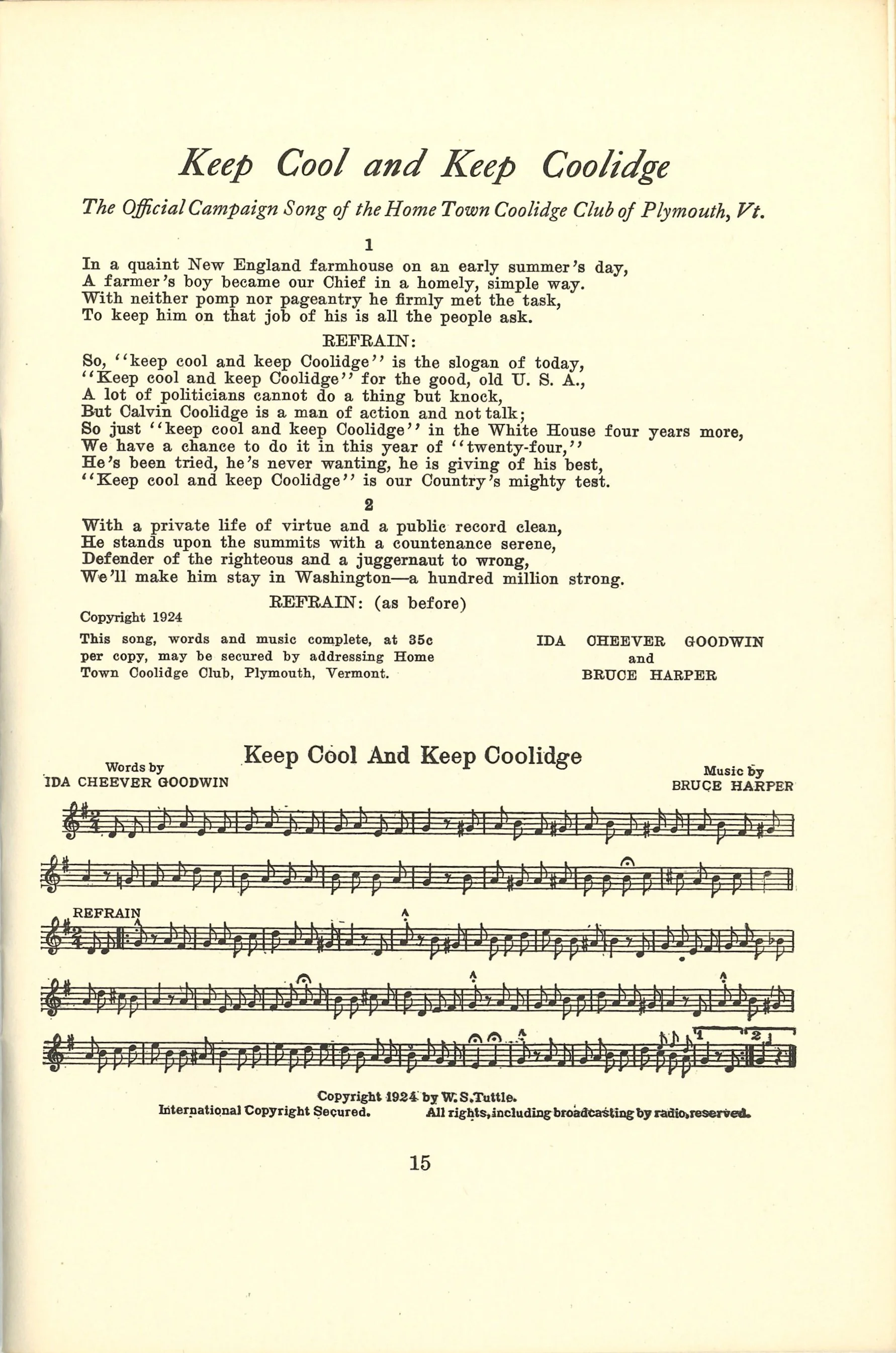
These objects were more than promotional material. Together, they created a physical connection between a supporter somewhere in America and the small Vermont community that called Coolidge its own.
A membership card could be filled out, accompanied by one dollar, and mailed back to the club at Plymouth Notch.
A Membership Card Tells a Story
The collection showcases membership cards from 35 states, and a few from England. The names came from communities throughout the United States, demonstrating how an organization founded in a Vermont village could build a national network.
Each card represents an individual who took the time to respond to the campaign. Some members left only their names and addresses.
Others told their stories.
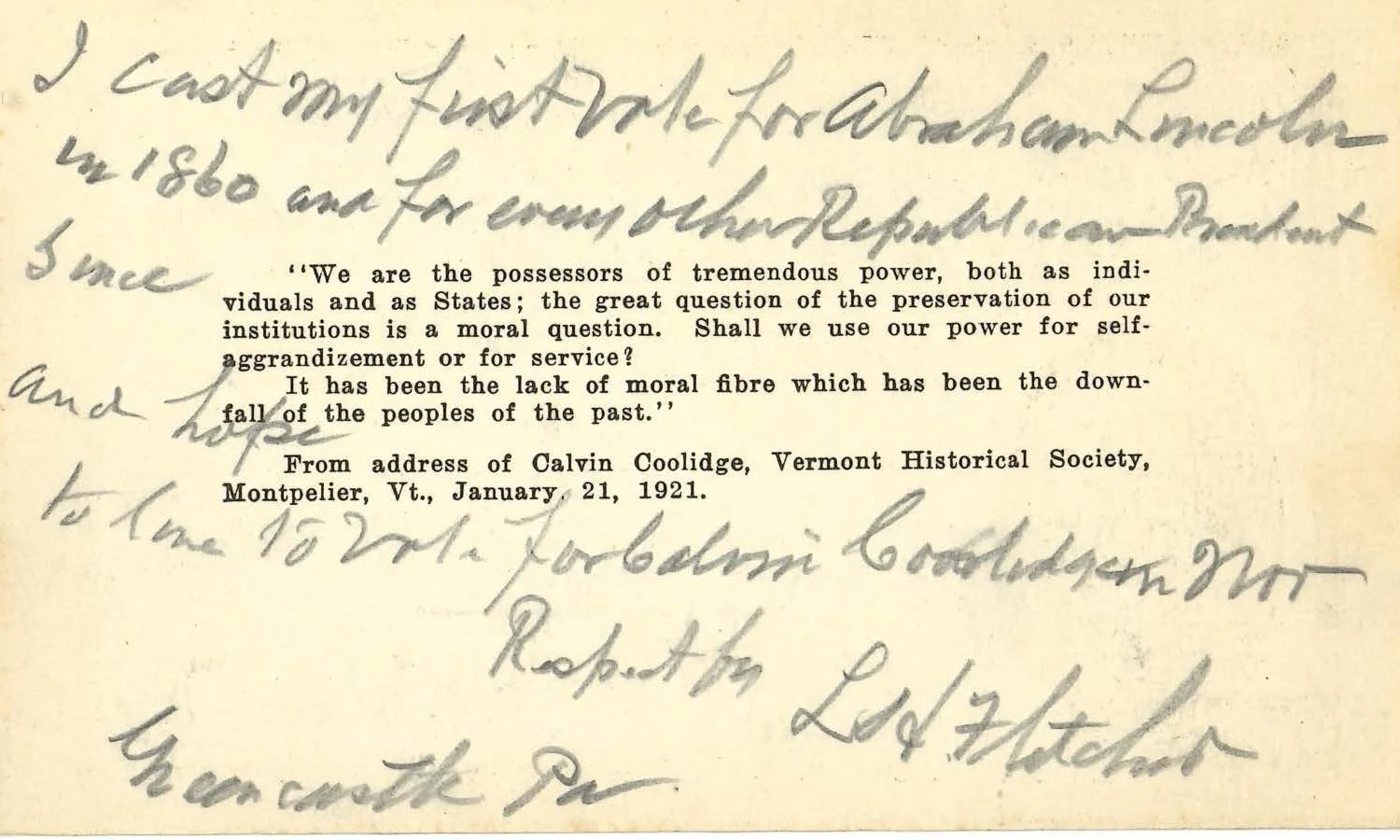
Among the membership cards is one from L. H. Fletcher of Greencastle, Pennsylvania, who was 85 years old when he joined. On his card, he wrote:
“Father of Henry Prather Fletcher, U.S. Ambassador to Italy. I cast my first vote for Abraham Lincoln in 1860 and for every other Republican President since, and I hope to live to vote for Calvin Coolidge in Nov. Respectfully, L. H. Fletcher, Greencastle, PA.”
Fletcher’s words transform an ordinary membership card into a personal historical document. His membership card connects two very different eras of American history through the experience of a single voter.
A History Lesson on Every Card
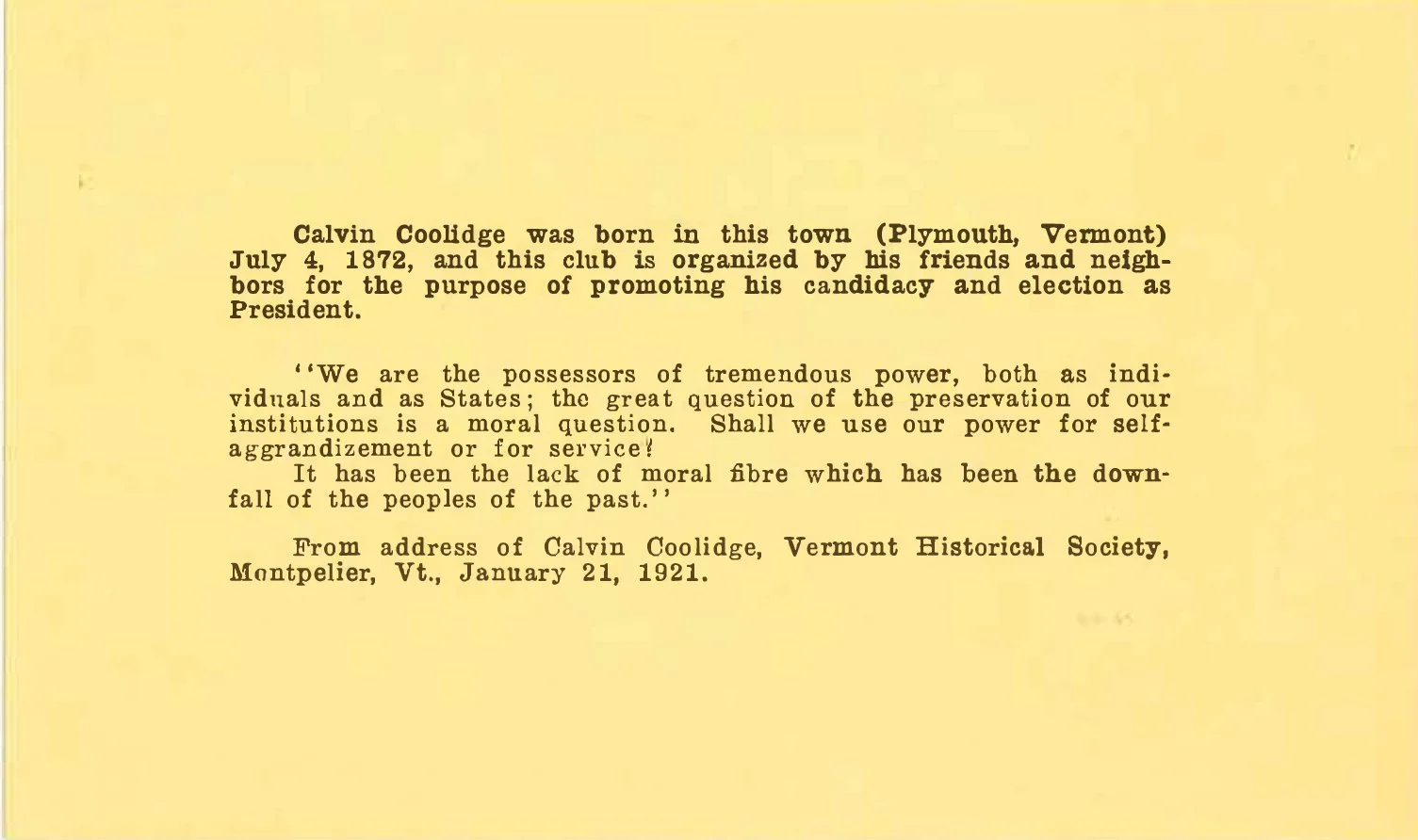
The back of the membership card carries a quotation from an address Coolidge delivered before the Vermont Historical Society in January 1921. In the speech, titled “Some of the Teachings of History,” Coolidge said:
We are the possessors of tremendous power, both as individuals and as States; the great question of the preservation of our institutions is a moral question. Shall we use our power for self-aggrandizement or for service?
It has been the lack of moral fibre which has been the downfall of the peoples of the past.
The Home Town Coolidge Club was promoting a presidential candidate, but the card also presented its members with Coolidge’s thoughts about the meaning and value of history.
Certificates for the Coolidges
The relationship between the club and the Coolidge family was personal as well as political. The first certificates of membership were presented to Calvin and Grace Coolidge on May 3, 1924.
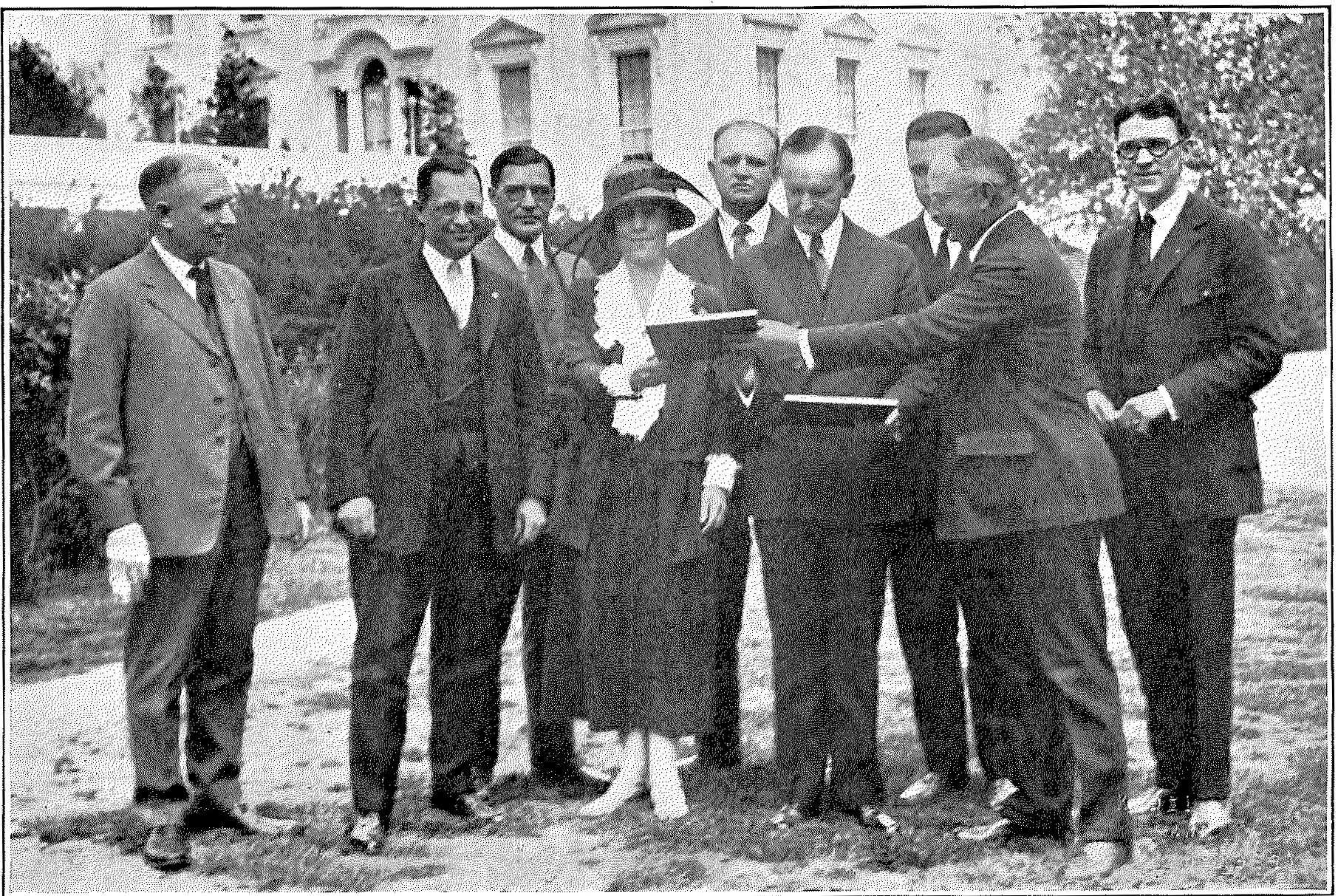
The presentation symbolized the relationship between the president and the community where his public identity had begun. Although Coolidge’s political career had taken him from Vermont to Massachusetts and eventually to Washington, Plymouth Notch remained central to the way supporters connected with his character and background.
More Than Memorabilia
The surviving collection is valuable not simply because it documents a presidential campaign. It also reveals how ordinary people participated in national politics at the time. A one-dollar membership, a signed card, a letter mailed to Vermont, or a certificate displayed at home could make a distant presidential campaign feel personal.
The thousands of surviving membership cards donated by Dr. Usher demonstrate the organization’s national—even international—reach. They came from locations near and far, part of a national organization whose identity was rooted in one small community. The accompanying letters preserve individual voices behind the membership numbers.
These artifacts remind us that history is often preserved not only in presidential papers and official records but also in the small objects people saved: a membership card, a certificate, a letter, a booklet, or a song.
And together, they tell the story of how Plymouth Notch became the hometown of a president—and how that hometown reached out to a nation.
Tami Bowen is the office administrator and executive assistant at the Calvin Coolidge Presidential Foundation in Plymouth Notch, Vermont.