
The Grit That Built American Business
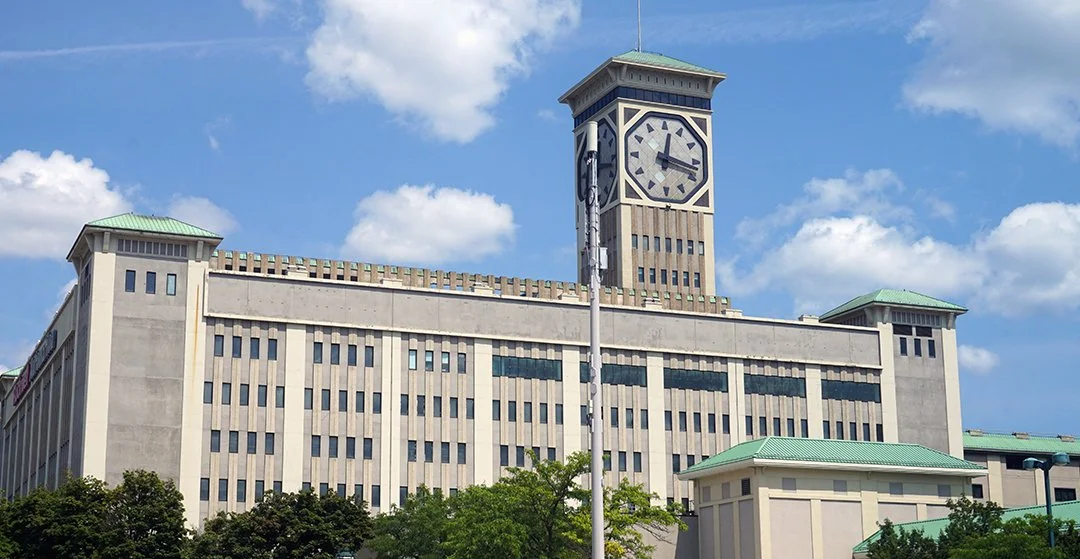
The four-sided clock tower the Bradley brothers installed on their Allen-Bradley Building remains a Milwaukee landmark to this day
By Richard W. Graber
This article appears in the Summer 2026 issue of the Coolidge Review. Request a free copy of a future print issue.
There is something uniquely American about the ability to build an extraordinary business from almost nothing. In this country, people can set out with no guarantees, no pedigree, and often no permission—armed only with an idea and the conviction that it can be made real.
Where else does that happen?
A light bulb moment in a garage or dorm room can become a life-changing product that transforms the way we live, work, and communicate. For Lynde and Harry Bradley, the path to their many inventions began in their mother’s house.
While every business origin story is unique, nearly all successful entrepreneurs throughout American history share three defining characteristics. These are traits that the Bradley brothers personified, especially between 1900 and 1912 when they were trying to get their business off the ground.
Boundless Curiosity
The first of those traits is an inquisitive mind.
Lynde Bradley let his curiosity guide him. Born in Milwaukee in 1878, Lynde loved to tinker, much like his parents. His mother, Clara, patented a unisex union suit in 1877, and his father, Henry, patented boiler-insulating material in 1888. As a teenager, Lynde looped telegraph wires over housetops and repaired neighbors’ doorbells.
One of his classmates noticed his curiosity and loaned him a slim book, Electricity for Engineers, at a time when electricity itself was still emerging.
That book changed everything. It ignited Lynde’s natural fascination with how things worked—so much so that he built a rheostat. This device, used to regulate electrical current by varying its resistance, would be the first of many he built.
Harry Bradley later wrote of his brother, “Even as a boy he was an inventor and a mechanic of ability, one who loved machinery, listened to it, and heard its secrets.” At age sixteen, Lynde received his first patent for an electrically operated wind vane. He also developed a passion for the X-ray, and with his physics teacher he built what was likely the first X-ray machine in Milwaukee.
At the same time, the Bradley family’s financial situation became dire. Their father suffered from a disability, and their mother was forced to turn their Milwaukee residence into a boardinghouse.
To help support the family, Lynde dropped out of school and opened Milwaukee X-Ray Laboratory, the city’s first radiology business. A frequent patron of the business was Dr. Stanton Allen, a physician who later became a father figure and benefactor to Lynde.
That business failed after two years, and Lynde took a job at the Milwaukee Electric Company. Yet he couldn’t stop tinkering, inquiring, and dreaming. He thought back to the rheostat he had created a few years earlier and was convinced that if he could improve it, there would be unlimited market potential.
Refusing to Quit
In 1901, at the age of twenty-three, Lynde left the comfort of a steady paycheck and set out on his own. And that decision brings us to the second essential quality of entrepreneurial success: persistence—dogged, relentless persistence.
Since Lynde’s family was in no position to lend him money, he turned to his mentor Dr. Allen, who gave him $1,000 in seed money. Lynde set to work on a controller to speed up and slow down motors, using an old woodshed as his workshop. He filed a patent, and with initial results on his project showing promise, he and Dr. Allen opened their own shop on Milwaukee’s South Side.
The Milwaukee market seemed promising. The area had an abundance of small factories and a huge pool of immigrants, mostly Polish, who were eager to work. But the shop didn’t make a single sale in its first year. The partners faced lawsuits for late payments on rent and shop labor.
Lynde was living on next to nothing. He later recalled that friends became convinced he and Dr. Allen had “climbed the wrong tree.” Their landlord told them they would “never accomplish anything and would finally go broke.”
Yet he refused to give up.
After another year, Lynde had grown more desperate. He later wrote, “My clothes were about worn out, and it appeared that we must either make some money or quit.”
Still, quitting was never part of the equation. Lynde found another partner with more resources to assist with manufacturing and marketing their product. Demand slowly ramped up, to the point that the small company, known as Compression Rheostat, needed additional help.
Lynde turned to his younger brother, Harry, who was nineteen at the time. Like Lynde, he had to drop out of high school. Also like Lynde, he had an inquisitive mind and mechanical ability. Lynde’s spirit of innovation was contagious, and Harry became his eager apprentice.
In his memoirs, Harry wrote, “Often, Lynde must have wondered what to do about me, but he matched his patience against my impatience and opened for me the treasures of his own idealism.”
“Our Fighting Blood Was Up”
The brothers made headway together, although progress was still painfully slow and uneven. They endured years of financial crises and technical setbacks. A brief move to Michigan proved disastrous, entangling them with a corrupt manufacturing partner who eventually went to jail.
Finally, in 1908, after years of trying, a breakthrough solved the technical problems they had been experiencing. They worked overtime to grow their business, hiring workers and improving their management structure. On January 3, 1910, they renamed the company Allen-Bradley. The Allen in Allen-Bradley was, of course, Dr. Stanton Allen in thanks for his $1,000 in seed money years before.
Buyout offers soon followed. The brothers refused them all.
Lynde explained: “Harry and I did not want to sell out. Our fighting blood was up. We were young men with a chance to have a fling in the business world and we wanted to have a try at it and the offers these companies made us only increased our enthusiasm.”
By 1912, the brothers were ready to branch out. The timing, as it turns out, couldn’t have been better.
As American industry mobilized during World War I, demand for electrically powered machine tools exploded. So did demand for Allen-Bradley’s controls. Soon, the Bradley brothers’ biggest problem became a good one—scaling up.
One solution was to find a bigger space. They built what eventually became the Allen-Bradley Building. Its famous (at least in Milwaukee) four-sided clock tower remains a city landmark to this day.
After the war, the company became a major manufacturer of radio components, a successful endeavor that launched the business to national prominence.
The Dignity of Work
Then the Great Depression hit. In less than two years, sales dropped more than 40 percent and the company’s very survival was in doubt.
Harry wrote, “We were absolutely out of cash, the money we had saved was gone long ago, and the banks were deaf to all our entreaties.”
Yet even in those dark moments, the Bradley brothers held fast to a third—and often overlooked—principle of business success: a belief in the dignity of work.
Harry captured it this way: “Lynde wanted, and so did I, people who thought of their jobs not in terms of paychecks, but as the end result of their own work. To us, every job was an open door to the high ground of human freedom and general happiness.”
The brothers looked out for their employees in ways we just don’t see in today’s world. It was reflected in all their business decisions. For instance, during the Depression, they slashed their own pay, and no employee suffered a wage reduction without receiving an equivalent value in company stock.
Lynde and Harry also went to great lengths to cultivate a vibrant community at the factory. Employees had their own bowling, basketball, baseball, and tennis teams and even an orchestra that played during lunch and toured throughout the country. The company rooftop had badminton courts, a small boxing ring, and an area to fine-tune golf swings.
By the mid-1950s, the company held legendary Christmas parties for the seven thousand children of Allen-Bradley employees—and each child left the parties with a sack of treats personally selected by senior management.
The Power of Free Enterprise
The success of Allen-Bradley continued long after the deaths of Lynde in 1942 and Harry in 1965. In 1985 the company was purchased by Rockwell International for $1.6 billion, which at the time was the largest price ever paid for a privately held company in the United States. While I suspect the brothers would not have been thrilled with the decision to sell their company, I’m convinced they would be proud of the legacy created by the foundation in their names.
Today The Bradley Foundation’s walls are lined with reminders of the brothers’ ethos, including old Allen-Bradley calendars. One calendar declares, “The American system—free enterprise—has enabled the American worker to enjoy a higher standard of living than workers in any other country.”
Free enterprise and limited government are what allowed generations of innovators like the Bradley brothers to build America and rescue it when it needed it the most. They allowed Lynde and Harry Bradley to think big, to fail, and ultimately to succeed beyond their wildest dreams. Indeed, those three essential traits—boundless curiosity, relentless persistence, and a belief in the dignity of work—have been and hopefully will continue to be America’s greatest competitive advantage.
Richard W. Graber is the president and CEO of The Bradley Foundation. He previously served as the U.S. ambassador to the Czech Republic and as a senior executive at Honeywell International.
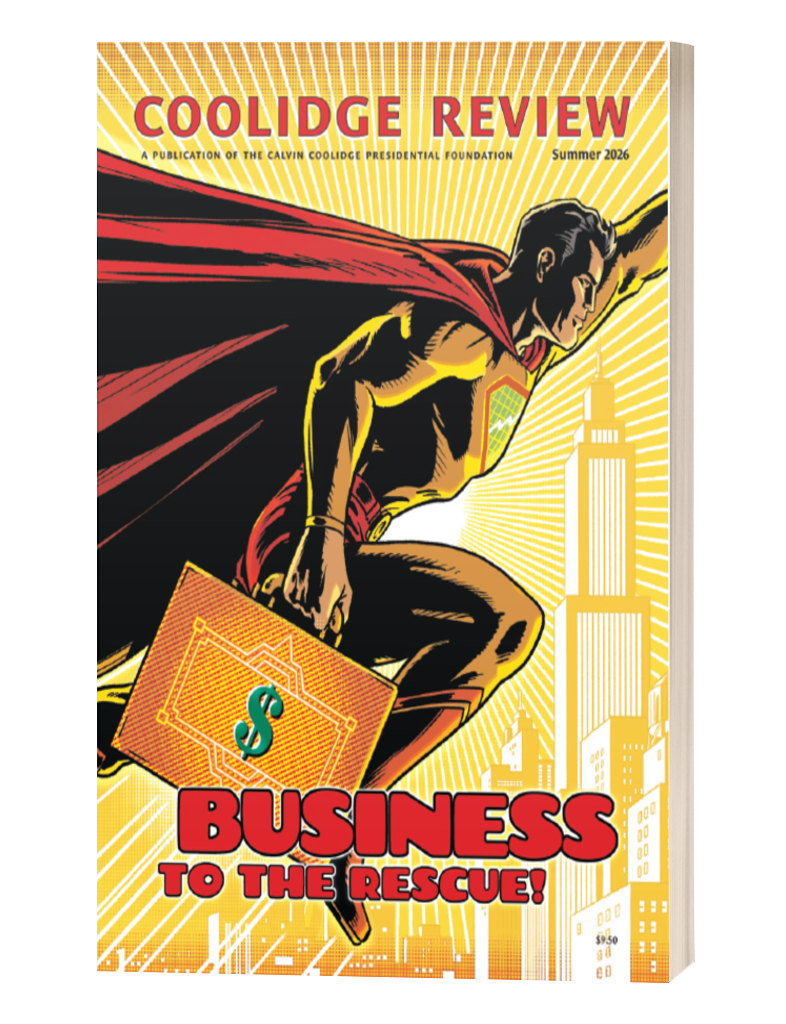
This article appears in the Summer 2026 issue of the Coolidge Review. Request a free copy of a future print issue.