
Coolidge and Mellon at Washington National Cathedral
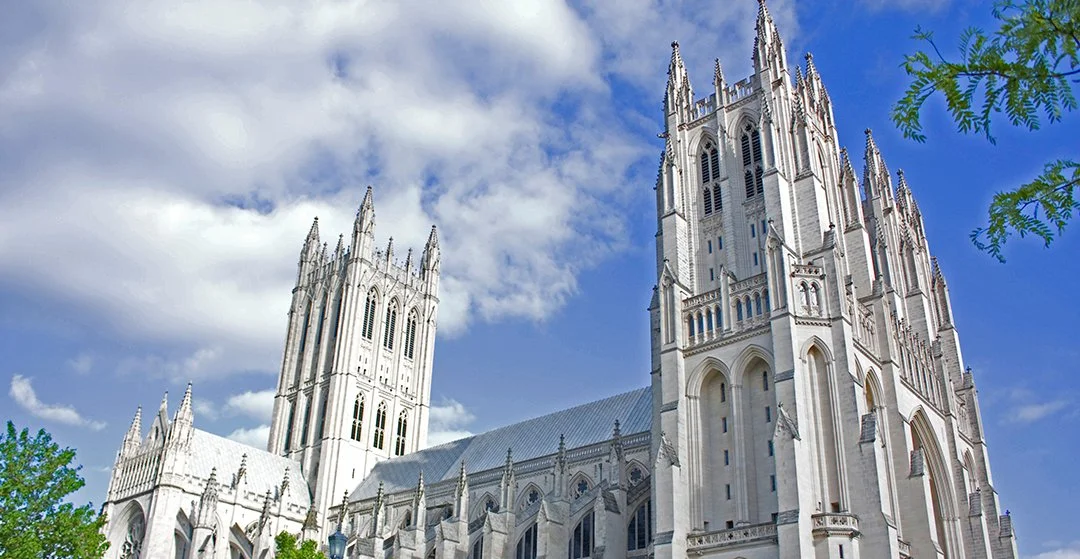
Washington National Cathedral, where visitors can find tributes to President Coolidge and his treasury secretary, Andrew Mellon
(Wikimedia Commons)
By Jacob McNeill
Within less than two weeks in January 2025, Washington National Cathedral hosted the state funeral for President Jimmy Carter and the traditional national prayer service after a presidential inauguration.
The cathedral thus fulfilled a vision Pierre Charles L’Enfant had laid out in his 1791 plan for America’s capital city. L’Enfant proposed a church “for national purposes, such as public prayer, thanksgivings, funeral orations, &c.”
Yet the cathedral’s foundation stone would not be laid until 116 years after L’Enfant presented his plan. “Godspeed the work begun this noon,” said President Theodore Roosevelt at that ceremony on September 29, 1907. It would take another 83 years before President George H. W. Bush laid the final finial.
Today, a visitor to the cathedral gets a clear sense of being in the nation’s capital. One finds the tomb of President Woodrow Wilson as well as bays dedicated to George Washington and Abraham Lincoln.
The cathedral also has nearly 200 needlepoint kneelers honoring notable Americans, including presidents, politicians, artists, novelists, generals, inventors, and scientists. The kneelers, designed and hand-stitched by volunteers, all have the same red background but feature symbols unique to the honoree. Calvin Coolidge’s, for example, includes a beehive—“the traditional symbol for thrift,” as newspapers pointed out when the kneelers debuted in the 1960s.
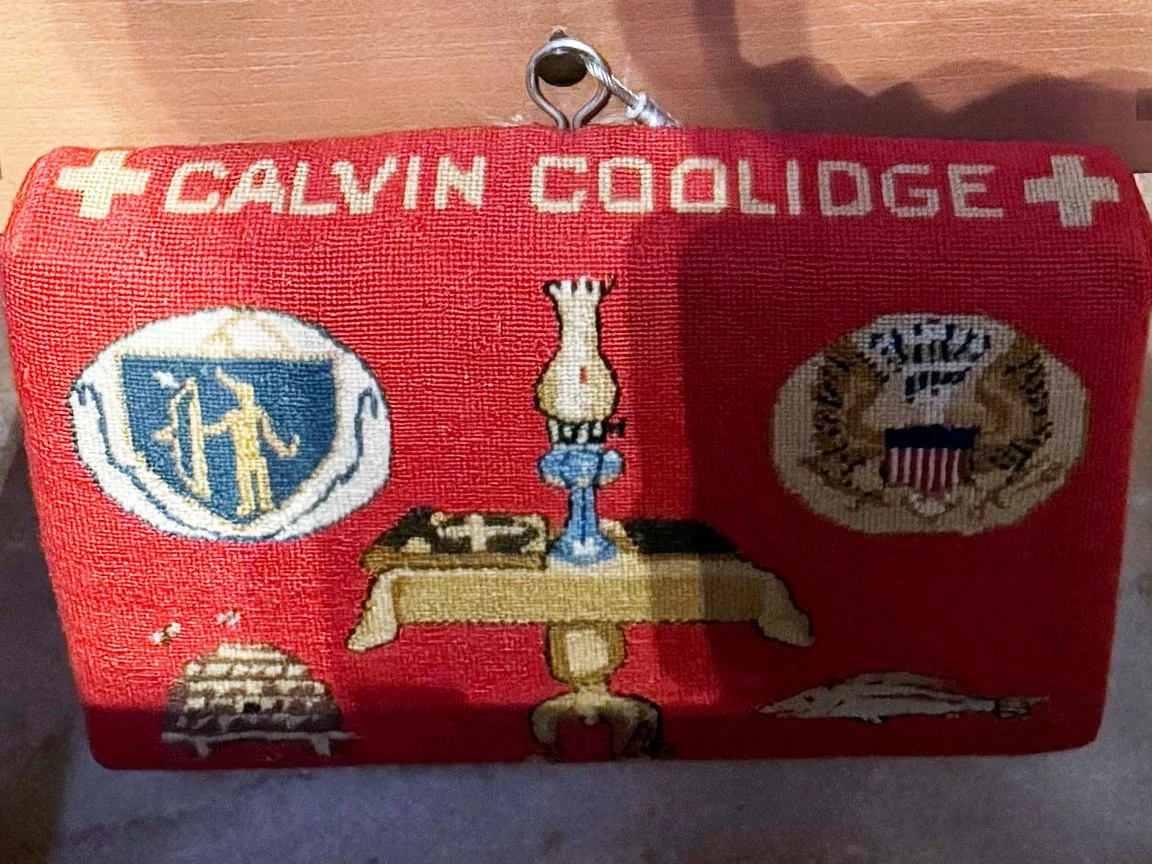
The Coolidge kneeler
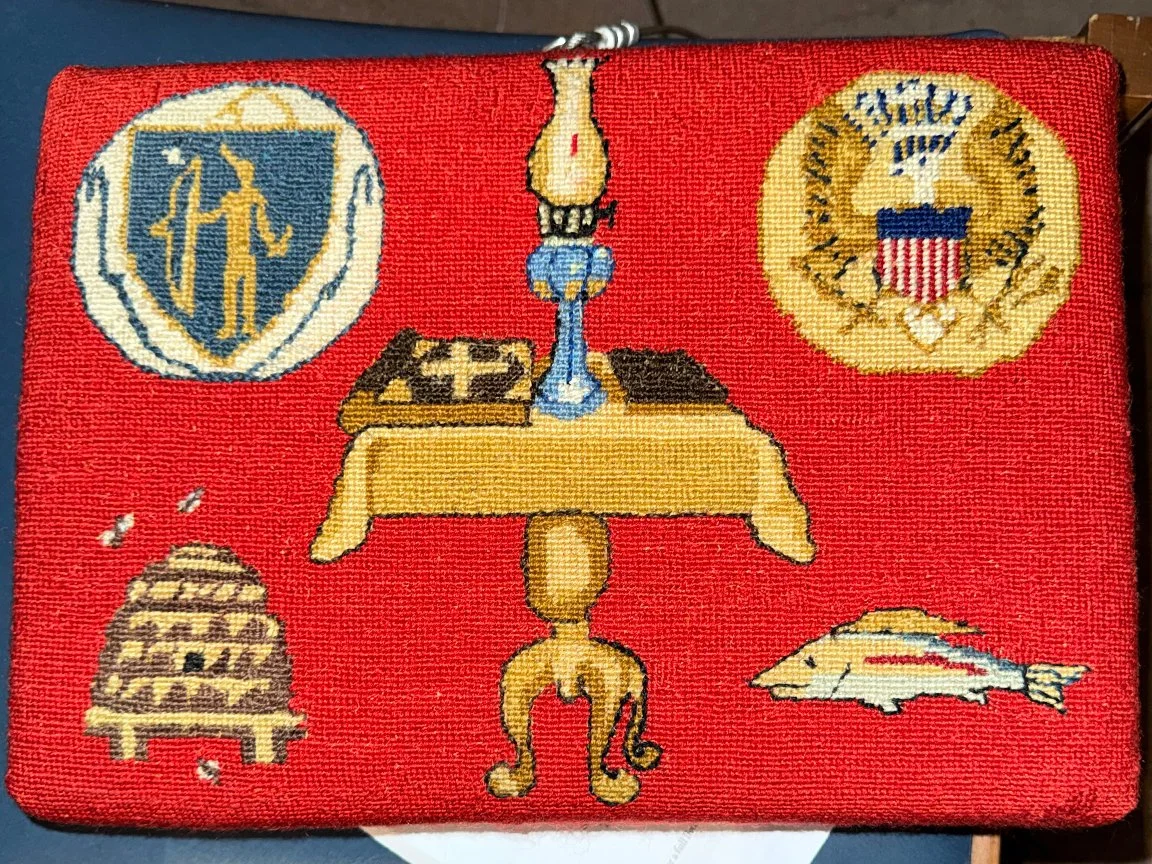
The symbols on Coolidge’s kneeler
The Mellon Bay
Coolidge’s treasury secretary receives more prominent attention.
Andrew Mellon, the wealthy banker, industrialist, and philanthropist, served as treasury secretary under three presidents: Warren Harding, Coolidge, and Herbert Hoover.
After coming to the nation’s capital, Mellon “acquired a new and absorbing interest in the building and beautification of Washington,” biographer David Cannadine writes. That interest led Mellon to join the Cathedral Council and become treasurer of its building fund.
In 1926, Mellon’s daughter, Ailsa, married David Bruce, the son of Senator William Cabell Bruce. The wedding ceremony was held at the cathedral. “Space was limited,” Cannadine points out, for only the Bethlehem Chapel had been completed by that point. Aside from family members, only leading Washingtonians could attend. Guests included President and Mrs. Coolidge, cabinet members, and Chief Justice William Howard Taft. The families didn’t face the same space restrictions at the reception—to which they invited another 2,000 guests.
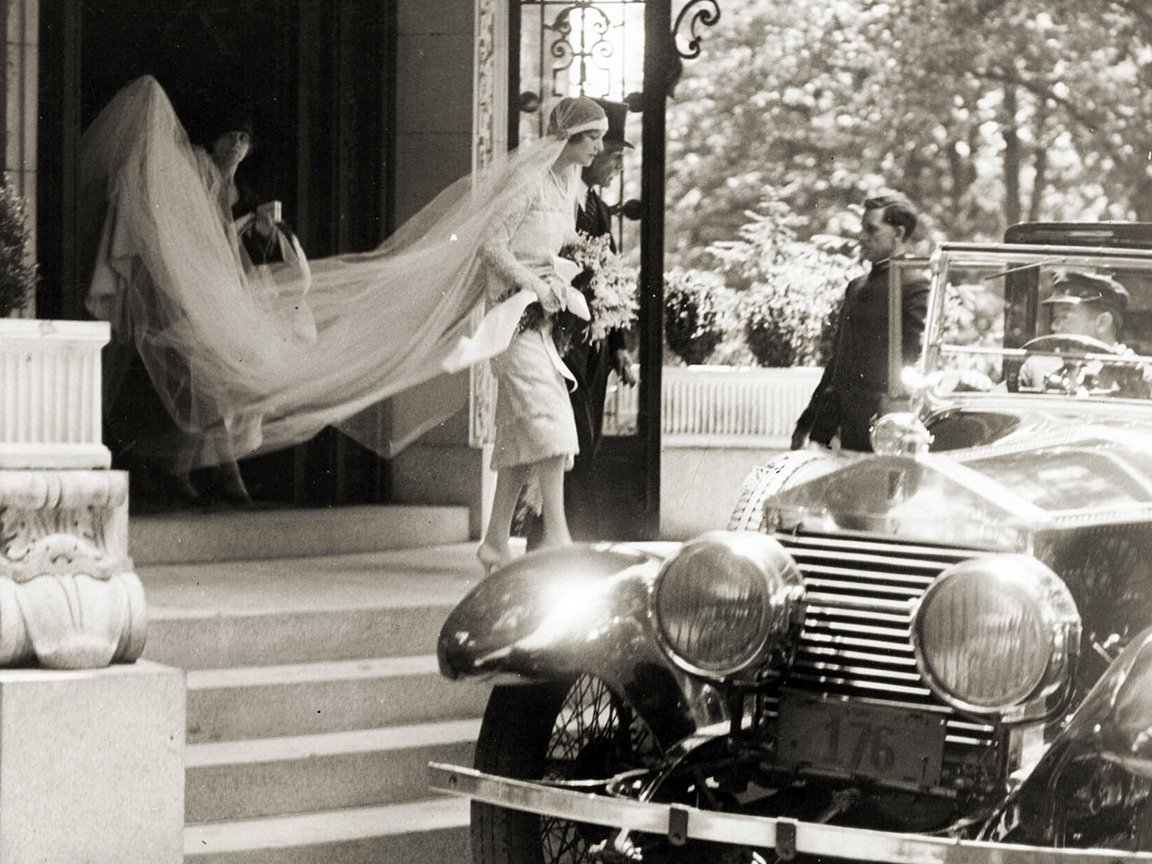
Ailsa Mellon leaves the Mellons’ residence for her 1926 wedding to David Bruce, the son of a U.S. senator
(Carnegie Museum of Art)
In 1952, fifteen years after Mellon’s death, the cathedral dedicated the Andrew Mellon Memorial. Today, this bay also memorializes Mellon’s son, Paul, another philanthropist. The Mellon family “has been very supportive of the cathedral” over the years, the cathedral’s head archivist says in an email.
The most noticeable aspect of the Mellon Bay is a cross inspired by the Coventry Cross of Nails. After England’s Coventry Cathedral was damaged in the Blitz, a priest recovered nails from the ruins and bound them into a cross. At the same time, a stonemason saw that two charred pieces of wood in the wreckage had fallen in the shape of a cross. The cathedral soon placed this cross on an altar of rubble with the words “Father forgive” inscribed on the sanctuary wall.
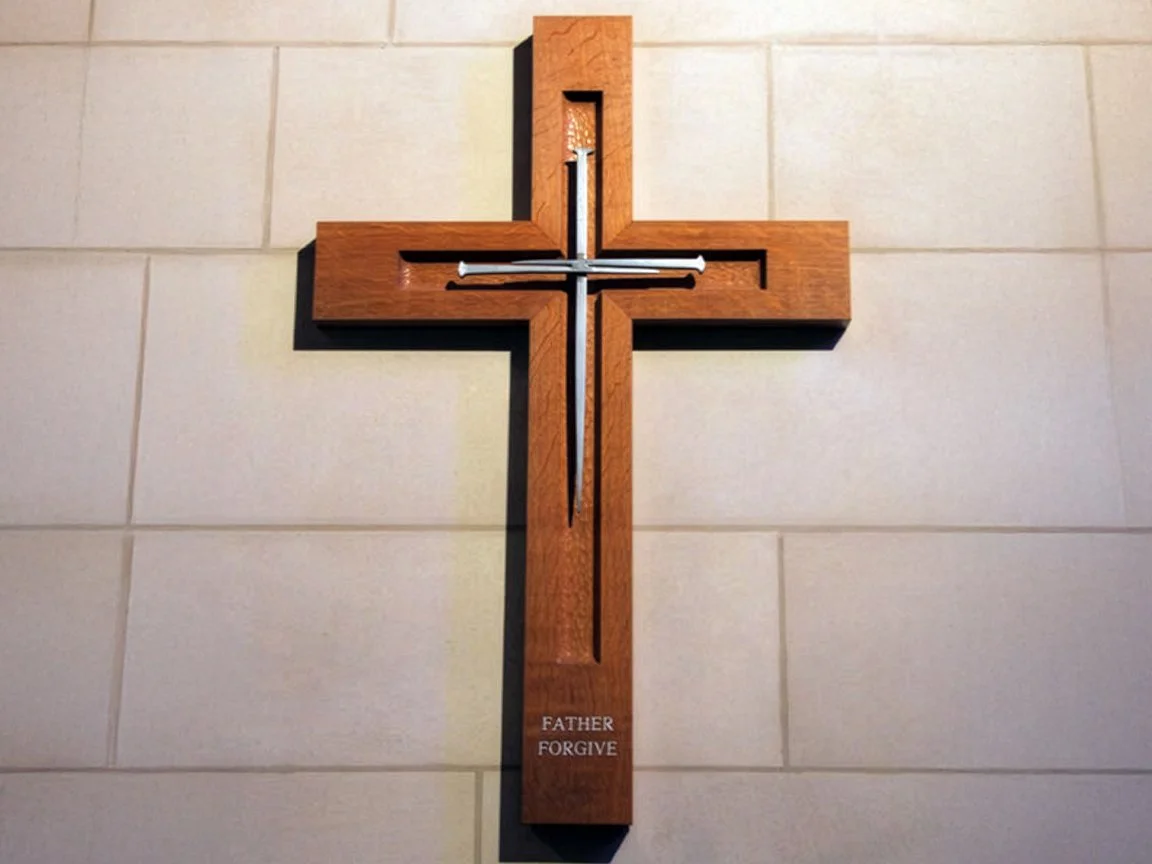
The cross in Mellon Bay
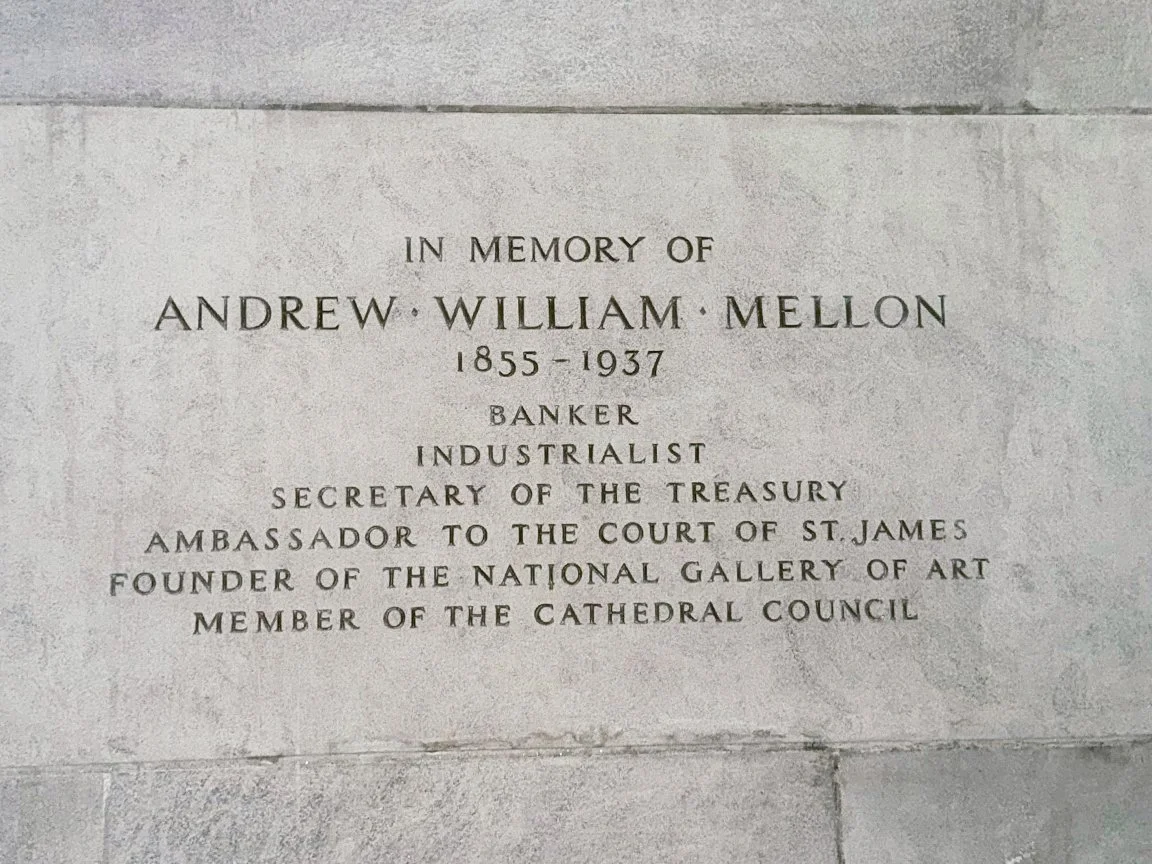
Memorial inscription
Next time you’re in Washington, be sure to check out the peaceful Mellon Bay near the front of Washington National Cathedral’s nave. Generations of support from the Mellon family made it, and the cathedral itself, possible.
Jacob McNeill is program manager of the Coolidge Senators program at the Coolidge Foundation.