
The Roaring Twenties: Myth and Reality
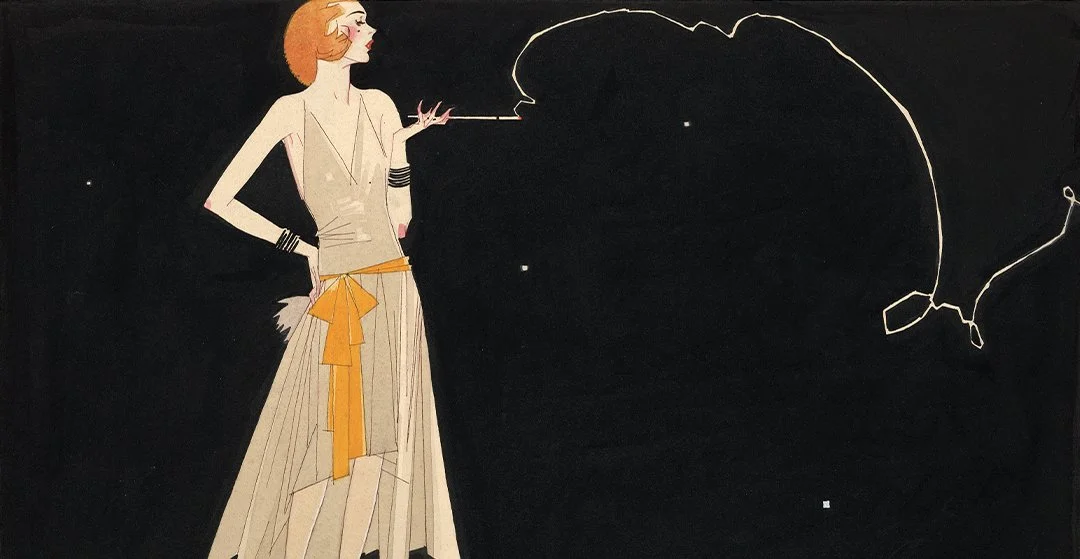
Mass media perpetuated the idea that the 1920s brought a “revolution in manners and morals”
By Wilfred M. McClay
This article appears in the Winter 2026 issue of the Coolidge Review. Request a free copy of a future print issue.
One of the chief dangers of writing the history of recent events is precisely the lack of distance that we have from them. We should be wary of the adage that journalism is the “first rough draft of history.” First impressions of participant observers are not always the most accurate or perceptive source of historical insight. In court cases, in fact, eyewitness testimony is often found to be the least reliable evidence.
By the twentieth century, unprecedented forms of mass communications had made it possible to produce journalistic “first drafts” that were captivating, vivid, and believable—and yet one-sided, oversimplified, or otherwise misleading.
We saw some indications of this problem even before the century began. Consider the role that mass-circulation daily newspapers played in 1898. They sensationalized the explosion of the battleship Maine in Havana Harbor and inflamed public opinion against the Spanish, pushing America toward war before the facts were known.
Two decades later, during the First World War, the Creel Committee used sophisticated communications technologies and emotion-laden propaganda to mobilize public opinion in service of the war effort.
The same techniques of propaganda and sensationalism had their uses in peacetime. The 1920s were the first great era of national advertising, which went hand in hand with the development of a national consumer economy. Advertising stimulated consumer spending, which was fueled in part by the increased availability of consumer credit, allowing for the easy purchase of automobiles, radios, and other household appliances. Advertising also promoted spending on leisure activities like spectator sports and moviegoing, thus creating a version of celebrity culture. Radio and motion pictures took off during this decade, as did many newspapers and magazines. Events, media, celebrities, consumption—all were woven together.
And it is to them, and to books like Frederick Lewis Allen’s influential 1931 history, Only Yesterday, that we owe an enduring image of the Twenties as an age of, in the words of historian Kenneth S. Lynn, “jazz babies, speakeasies, sports worship, sex crimes, xenophobic politics, and governmental graft.” The new mass-cultural mechanisms, and the “gargoyle journalism” (in Lynn’s words) that they spawned, fashioned large and believable images that historians must always struggle against in rendering an independent judgment of the past.
Revolution and Counterrevolution
A case in point is Allen’s oft-quoted assertion that the Twenties saw a “revolution in manners and morals,” a refrain echoed in nearly all textbooks. Allen didn’t base this judgment on careful empirical observation; he based it on the era’s media salesmanship. For example, to support the argument that the “Jazz Age” overthrew conventional morality and surrendered to “a widely pervasive obsession with sex,” Allen referred to the enormous amount of space that newspapers gave to sexual themes, and to advertisements such as the film teaser that promised viewers they would see “brilliant men, beautiful jazz babies, champagne baths, midnight revels, petting parties in the purple dawn, all ending in one terrific climax that makes you gasp.”
Allen was not entirely wrong. But he was looking at one small portion of society, the sons and daughters of upper-class and upper-middle-class backgrounds who could afford such explorations and indulgences. He was looking at the world of characters like the glamorous New Yorkers in F. Scott Fitzgerald’s novels The Great Gatsby and This Side of Paradise. He was not looking at the works of a popular writer like Indiana’s Booth Tarkington, whose novel Alice Adams, winner of the 1922 Pulitzer Prize, dealt with the aspirations and fundamental decencies of a lower-middle-class family in the Midwest. Nor was he looking at Fitzgerald’s novels themselves very closely, since their characters, most of whom were (like the author) displaced Midwesterners, were filled with nihilism and foreboding about the possible moral consequences of the prosperity they were enjoying.
In other words, to the extent that a revolution in manners and morals occurred in the Twenties, we need to see it as a complicated thing. Class, social status, region, religion, race, and a dozen other considerations played a role, and revolution and counterrevolution were going on at the same time.
The Twenties were a time of the most advanced experimentation and cosmopolitan modernism in the arts and literature, epitomized by the appearance of abstract painting, atonal music, free verse, stream-of-consciousness narrative, and other techniques. Intellectual bohemias emerged in places like Greenwich Village, New York, where the revolution in manners and morals was going full blast with a very small number of people.
But the Twenties also saw a resurgence of nativist sentiment, featuring the revival and rebranding of the Ku Klux Klan as an anti-immigrant, anti-Catholic, and anti-Jewish organization, in addition to its anti-black agenda. The Klan developed a national following stretching from Oregon to Maine. Some of this nativist sentiment was charged by the influx of more than twenty-five million immigrants between 1870 and 1920. Those immigrants, many of them Catholics and Jews from central and eastern Europe, added to the competition for jobs and other pressures of postwar life. Congress responded by passing two laws, in 1921 and 1924, that established stringent quotas for immigration.
The Twenties were likewise a time of intense conflict in the realm of religion. The rise of liberal Progressivism and modernism in the urban churches was countered by the rise of a conservative Protestantism that insisted on a renewed commitment to Christian doctrinal tenets deemed foundational or “fundamental”—hence the term fundamentalism. Conservatives felt a growing apprehension that Darwinian science and liberal theology undermined the authority of the Bible and led to…well, to a revolution in manners and morals.
William Jennings Bryan, the three-time losing Democratic presidential candidate, devoted much of his postpolitical career to religious causes. He believed that Darwinism lent support to “the law of hate,” in which the “strong” were allowed to prevail over the “weak.” He also believed that Darwinian thinking had influenced the militarism of Germany: “The same science that manufactured poisonous gases to suffocate soldiers is preaching that man has a brute ancestry and eliminating the miraculous and the supernatural from the Bible.” For Bryan, Darwinism was to be resisted because it eliminated any basis for affirming the dignity of all human beings.
Bryan spearheaded an effort to ban the teaching of Darwinian evolution in public schools. He became involved in a test case in Tennessee, in which a young high school teacher named John Scopes challenged a state law outlawing the teaching of evolution.
The resultant trial, held in the summer of 1925 in Dayton, Tennessee, was a blatant publicity stunt by the town fathers. It also became a frenzied media “pseudo-event,” covered by two hundred reporters, including the famously acid-penned Baltimore critic H. L. Mencken. The trial featured a rhetorical duel between Bryan and Scopes’s attorney, the famous trial lawyer Clarence Darrow. Scopes lost the case, as it was always clear he would—there being no doubt that the textbook he used in his course taught Darwinian evolution. But the cause of fundamentalism was decisively set back by the ridicule and negative publicity that the trial generated.
Science Without Morality
That picture has remained fixed in the minds of many people, as has the image of Bryan as a representative of what Mencken liked to call “the booboisie.” The 1955 play Inherit the Wind, performed every year in dozens of American high schools, reinforces the negative view of Bryan and fundamentalism, as does the 1960 film version starring Spencer Tracy and Fredric March.
But that first draft of events has begun to wear thin. Recent historians of the trial such as Edward Larson have noted a complicating factor in the textbook Scopes assigned. George William Hunter’s A Civic Biology was an unapologetically racist text. It argued that “the civilized white inhabitants of Europe and America” were the “highest race type of all,” and that eugenics should be used to improve “the future generations of men and women on the earth,” which meant the elimination of such forms of “parasitism” as “feeble-mindedness” and other features of a “low and degenerate race.” The book’s very name implies a subordination of science to “civic” needs.
Support for eugenics was a position taken by many highly respectable people of the time: university presidents, foundation executives, titans of industry, and even members of the liberal and progressive wings of the clergy. Oliver Wendell Holmes Jr., a justice of the Supreme Court, rendered the decision in the 1927 case Buck v. Bell, which upheld state laws permitting the compulsory sterilization of the “unfit.” “Three generations of imbeciles are enough,” wrote Holmes, an admirer of Darwin and an exemplar of the scientific, skeptical, agnostic view of religion, much the same as Clarence Darrow.
Bryan never delivered his closing statement at the Scopes trial, because Darrow maneuvered the judge into recommending that the jury render a guilty verdict. But the statement Bryan crafted made a powerful case that resounds through the years, not as a refutation of Darwinian science but as a reflection on the moral dangers of science that is not subject to morality:
Science is a magnificent force, but it is not a teacher of morals. It can perfect machinery, but it adds no moral restraints to protect society from the misuse of the machine. It can also build gigantic intellectual ships, but it constructs no moral rudders for the control of storm-tossed human vessels. It not only fails to supply the spiritual element needed but some of its unproven hypotheses rob the ship of its compass and thus endangers its cargo. In war, science has proven itself an evil genius; it has made war more terrible than it ever was before. Man used to be content to slaughter his fellowmen on a single plane—the earth’s surface. Science has taught him to go down into the water and shoot up from below and to go up into the clouds and shoot down from above, thus making the battlefield three times as bloody as it was before; but science does not teach brotherly love. Science has made war so hellish that civilization was about to commit suicide; and now we are told that newly discovered instruments of destruction will make the cruelties of the late war seem trivial in comparison with the cruelties of wars that may come in the future. If civilization is to be saved from the wreckage threatened by intelligence not consecrated by love, it must be saved by the moral code of the meek and lowly Nazarene. His teachings, and His teachings, alone, can solve the problems that vex heart and perplex the world.
We can acknowledge Bryan’s insight here even if we are unpersuaded by his religious conclusions. And we should acknowledge the added complication that Bryan’s commitment to universal human dignity appeared to conflict with his own racial views: in a 1923 New York Times article he wrote that “white supremacy promotes the highest welfare of both races.”
We can also acknowledge that, in the long run, the Scopes trial was a wasted opportunity, a publicity stunt that failed to grapple with the issues it raised—issues that have bedeviled us ever since. Both Bryan and the Scopes trial were imperfect vehicles for exploring a profound theme, one central to our own times.
But whatever our judgment about those matters, we can agree that our understanding of the Scopes trial, of the “revolution in manners and morals,” and of much else about the 1920s is decisively colored by the journalistic first rough drafts that have proven so imperishable…and so misleading. After the passage of a hundred years, it’s time for us to give that history a fresh look.
Wilfred M. McClay holds the Victor Davis Hanson Chair in Classical History and Western Civilization at Hillsdale College. He is the author of several books, including Land of Hope: An Invitation to the Great American Story.

This article appears in the Winter 2026 issue of the Coolidge Review. Request a free copy of a future print issue.