
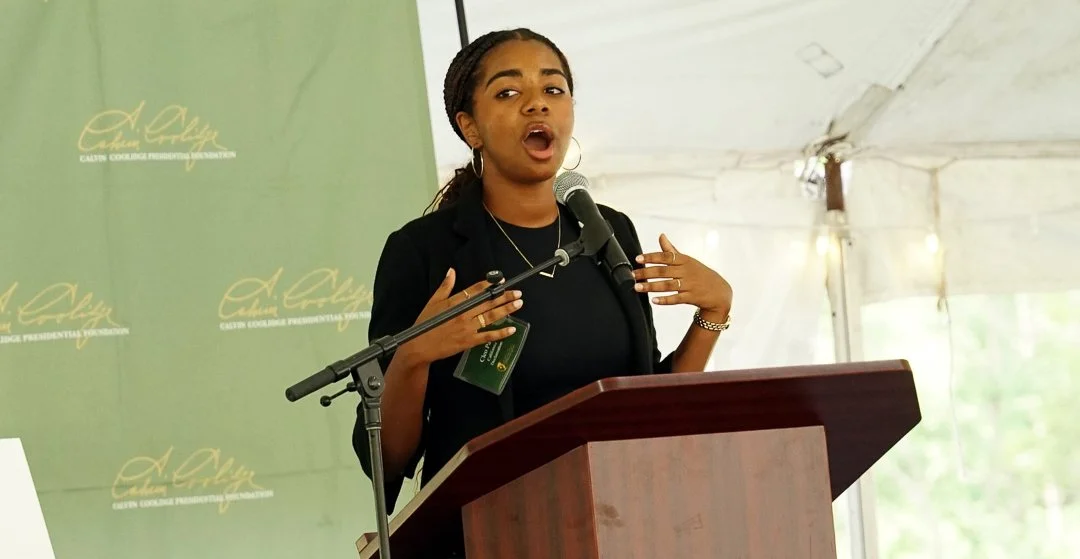
By Amity Shlaes
This article originally appeared in National Review.
Leftists have spooked conservatives into dumping cash into civics education. Private donors tell themselves that enough money—from themselves and, lately, from Washington—will produce a generation of William F. Buckleys and Margaret Thatchers. Or even someone as thoughtful as Daniel Patrick Moynihan. Minds that can formulate a decent argument. Minds able to weigh the pros and cons of socialism.
Naturally the same conservatives add a few zeros to the amount on their donation check when the undertaking gives off even a whiff of a chance of influencing an election.
With enough funding, the thought runs, the America 250 trumpets will sound loud enough to convert a generation. Enough funding will transform DEI-dominated schools, and even colleges, into citizenship factories that stamp out young patriots like widgets—or Goldwater Girls. Maybe even in time to counter a Zohran Mamdani in the upcoming local election.
Yet this assumption betrays a fatal error: conflating short-term politics with citizenship, long term. The widget patriot drive also misreads human nature. For the teacher who enforces patriotism in a classroom oppresses just as much as the lefty genderist instructor. Even twelve-year-olds can recognize such instructors for what they are: movement activists. Sooner or later, such teachers provoke the same reaction: mutiny. And mutineers are hardly a reliable voting constituency. Hillary Clinton, after all, started out as a Goldwater Girl.
What younger people crave is inquiry. Style matters more than substance in elections, just as the pundits say. It’s true in our culture generally, including in education. There, progressives have convinced the public that they hold the high ground. Operating in a playful, inquiring mode—or the appearance of one—has given institutions such as National Public Radio more influence than any Fourth of July rally or any single teacher.
Wakening to this truth, donors, parents, and many educators are turning to an approach that can offer pure inquiry: debate. Yes, that modest extracurricular activity, that simple league or club. A few hours of practice and a tournament or two supply young people with space to contemplate, space to learn, and—that opportunity so rare these days—the chance to play with ideas.
The Magic of Debate
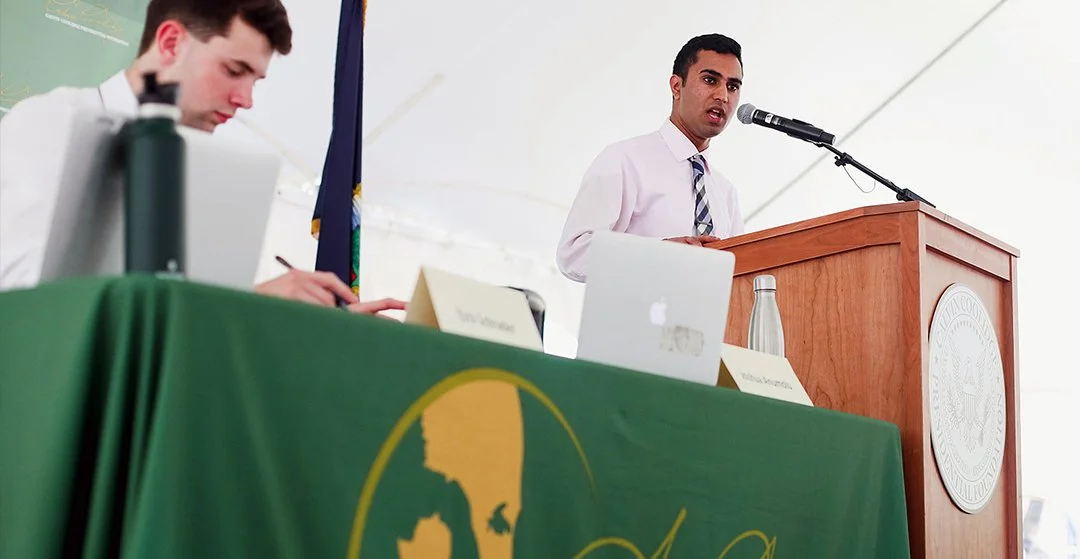
A Coolidge Foundation debate
Every venture has its magic. Compounding gives magic to markets. The actuarial pool brings magic to insurance. Debate is the magic of civics education and the ultimate work-around. It costs far less than reforming classroom curricula. Precisely because it is a sport—at least in the sense that kids live or die in a single afternoon of contest—debate rewards those impulses predominant in the teenager: curiosity (that sense of inquiry) and rebellion. Yet debate loses its magic when directed toward party politics—when, say, adults ask kids to choose between Marco Rubio and JD Vance.
A few years of supervising debate at the Calvin Coolidge Presidential Foundation have taught us that high school is the right place to start. Better results come when you allow students to grow slowly. Achieving that means applying the same principles that yielded WFB Jr., Moynihan, and the Iron Lady. We don’t enforce these principles perfectly. Still, we can offer an aspirational list:
Make debate live. Whenever possible, bring debaters and judges together in the same place on the same day. The more isolated your site, the better. Our most exciting debates take place in the middle of the Vermont woods. You are building a community, not auditioning youngsters for TV. Shut down their phones.
Supply the facts. Often, the facts for a debate are not available on the internet. We give debaters lawyer-style briefs featuring arguments for both sides. Our debaters do their own research to supplement the facts given, but the brief provides the basis.
Spend on star speakers, and insist they speak on policy, not their next campaign. The stream of quality minds—Albert Jay Nock, Frank Chodorov—that flowed through Great Elm, the Buckley family home in Connecticut, inspired not only adults but also the children, including WFB Jr. The teenager Margaret Roberts observed her father, an alderman, at work. In Oxford she found “a nursery for talent”—and a place where statesmen dropped in with exhilarating regularity. The trad culture of those times denied the future Iron Lady membership in Oxford’s debate powerhouse, the Oxford Union. But she could listen in. Today’s high schoolers need such non-screen experience. Our debaters shift in their chairs when they hear a real senator, Peter Welch of Vermont or Joe Manchin of West Virginia. They sat up when they realized Kevin Hassett was going to debate himself, arguing both sides on immigration.
Enforce the discipline of the narrow proposition. “Resolved: America Needs a Carbon Tax” works better than “Resolved: Global Warming Will End the Human Race.” “Resolved: The Capital Gains Tax Rate Should Be Zero,” not “Resolved: Capitalism Is Good.” Steer clear of natural law, angels, and pins.
Require debaters to stick to the proposition. We’ve all heard of climate change debates that became filibusters positing the racial hegemony of big corporations. Penalize debaters who ramble. Doing so halts the goofiness—instantly.
Recruit citizens as judges, not coaches. Debate coaches, like coaches in all sports, play to their sport’s culture, which in debate’s case emphasizes speed. Citizen judges reject fast talk. Citizen judges also favor common sense and civility.
Make them wear a tie. Or a dress. Many, even parents, resist these strictures. (“He’s hot.”) Still, as every parochial school alum knows, dress codes build respect for the undertaking.
Reward students who speak clearly. Boys often talk too fast and reference facts without defining them. Girls also speak too fast, and in tones higher than are natural, even for them. The higher notes are inaudible to many over age fifty. The old Valley Girl style encouraged that tendency, and it’s grown worse lately. If all learn now to speak slowly and clearly, they’ll do better at convincing others later.
Don’t platform your youth. Many love the idea of a child rocketing to world fame via social media: Greta Thunberg. But fueling the rocket does the child no favor. Buckley did not start out on Firing Line. Private community gives kids the opportunity to learn and make mistakes.
Focus first on quality, not scale. At the Coolidge Foundation we’ve paid the price of staying small—reaching thousands, not hundreds of thousands—in the hope of ensuring strong content and blocking out politics. Experience suggests that teaming up with other leagues can be a fool’s errand. So can trying to scale up by “getting debate in every classroom.” Sad as it is to learn, many teachers dislike conflict and bold statements. Others insist students replicate NPR patter. Teachers can sabotage your efforts, and administrators will back the teachers up.
The Ultimate Conservative Ideal
A final matter: After hearing strong arguments for “the other side,” even dignitaries whose names you know sometimes start to worry aloud:
What if debate converts this child to progressivism?
What if, indeed.
Sometimes, after all, the other side is correct. These days the GOP isn’t exactly known for its coherence. The concern that debate will train socialists betrays an unwarranted lack of confidence in both history’s evidence and the ultimate conservative ideal, individual freedom. Entrusted with facts early enough, many individuals will, after all, over time, see the merit in lower taxes, less regulation, and more autonomy for families.
Doubt this proposition? Please join me in testing it—through debate.
Amity Shlaes chairs the Coolidge Foundation, is the author of Great Society, and is a fellow of National Review Institute. She is at work on a history of the Gilded Age.
The Coolidge Review has republished this article courtesy of National Review. The original version of the article appeared here.