
Entrepreneurs’ View: Michael and Olga Block
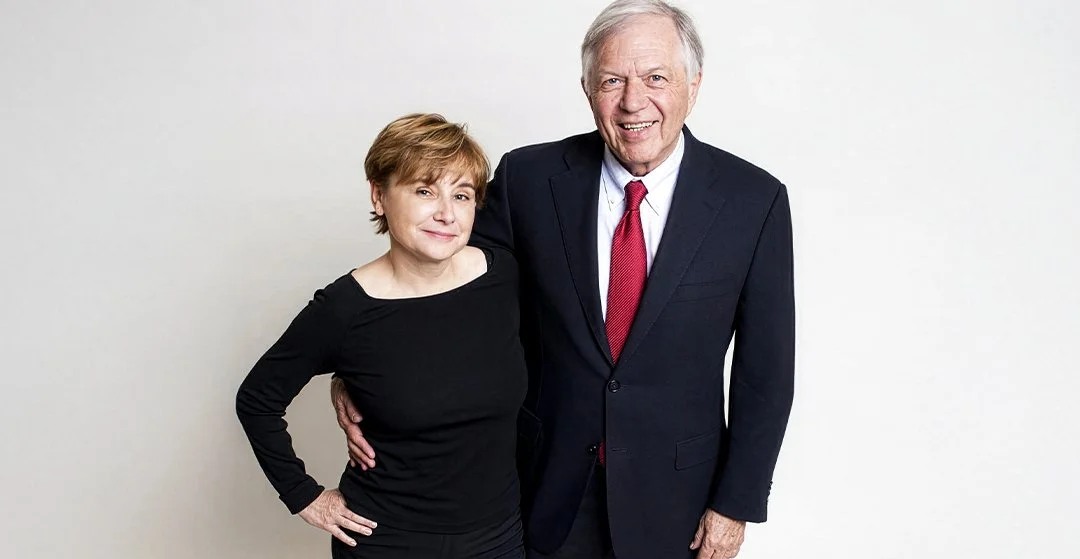
By the Editors
This article appears in the Summer 2025 issue of the Coolidge Review. Request a free copy of a future print issue.
Sometimes it takes an outsider to come up with the solution.
That was the case with Michael and Olga Block, two economics professors. Though hardly experts in K-12 pedagogy, back in the 1990s the pair looked at our schools and raised the obvious question: Why aren’t they better? In math, American high schoolers ranked only eighteenth among pupils of twenty-seven developed nations. Someone needed to provide U.S. students with a stronger foundation.
Thus was born the BASIS school. Starting in Tucson in 1998, the Blocks founded one school after another, charter and independent. And with rapid success. In 2018, the top five high schools in U.S. News & World Report’s national rankings were all BASIS schools—an unprecedented accomplishment. Today more than fifty BASIS schools—with locations from Silicon Valley to New York to Thailand—provide rigorous education.
The COOLIDGE REVIEW sat down with the Blocks to chat about their stunning breakthrough.
How do you start a school?
Michael: We started with numbers. American schoolteachers, principals, and parents look away from the evidence that their schools don’t deliver. If we were going to try to up the quality of education, we wanted to track results—rigorously.
Olga: We turned to the PISA, the most reliable international measure. The PISA provided a reality check for Americans’ illusions about their schools. In the early years we hired “quants”—data professionals. That way we wouldn’t develop any illusions ourselves.
Olga, you’ve said you were charmed by the idea of the charter school. Why?
Olga: A charter founder can shape the new school. I came to this country in 1996, and what I liked about America was that you could start your own project.
Another metric BASIS uses heavily is the Advanced Placement exam. Why?
Olga: The AP is not perfect but it’s the best American metric. Passing six AP exams is a requirement for high graduation from BASIS charter schools. Today, the average BASIS student graduates from high school with more than ten APs.
BASIS schools don’t always offer fancy sports programs or extracurriculars. Does that hurt your popularity?
Olga: Apparently not—BASIS schools often have wait lists. High schoolers don’t need a country club. That said, BASIS now offers many sports and academic clubs—just no football teams!
At some point, you switched from operating nonprofit to for-profit. Why?
Olga: At first we just thought we were reformers in the nonprofit sector. Everyone advised us nonprofit was the only way to build a school.
Michael: But nonprofit money comes with too many strings attached. We soon realized that some part of BASIS needed to be a for-profit business for BASIS to scale. We created our own business and contracted with nonprofits—say, charter schools. The profit our business made we poured into new schools. To serve the public good, the private sector is actually better. It’s a perversity, or an irony.
Recently you established the Michael and Olga Block Economic Essay Contest with the Coolidge Foundation. Why?
Michael: Economics is the area where American standardized tests are particularly poor. Schools iron in Keynesianism and inaccuracy. That’s one thing we like about Calvin Coolidge: he understood the power of the market to increase the standard of living.
Next year, you’ll be supporting the Coolidge Scholars’ trip to Prague. Why do you believe the Scholars should meet with people who lived and worked under communism?
Olga: As a Czech native, I lived under communism. It’s important for young Americans to encounter the record of communism firsthand.

This article appears in the Summer 2025 issue of the Coolidge Review. Request a free copy of a future print issue.