
By Diana Furchtgott-Roth
This article appears in the Summer 2026 issue of the Coolidge Review. Request a free copy of a future print issue.
Rising prices make angry voters. Small wonder, then, that presidents look for quick ways to tamp down those prices.
The rub is that presidents don’t have the power to reduce inflation. The Federal Reserve Board can influence inflation by raising interest rates, but without precision. In any case, presidents don’t want higher rates, especially in an election season. And always the most powerful operator in the room is markets, not the president or the Fed.
So chief executives resort to trying short-term magic, what one might call “electoral economics.” Look where you may in our history, you see the same result. A bit of prestidigitation may sometimes appear to control prices long enough to help the president. But only sometimes. And the magic never holds long term.
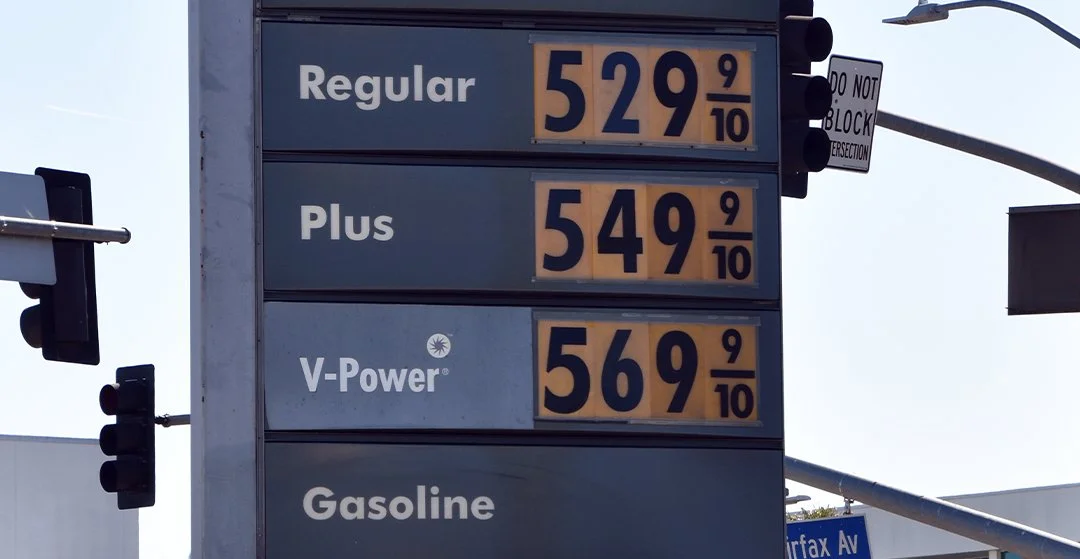
The Trouble with Gas Prices
Between early 1999 and the summer of 2000, gasoline prices in America jumped more than 80 percent. Voters certainly noticed: A Pew study found that “the rising price of gasoline attracted the most public interest of any news story of 2000.” Americans followed coverage of gas prices more closely than stories on that year’s presidential election, the USS Cole terrorist attack, the Super Bowl, or worldwide millennium celebrations.
A month and a half before the 2000 election, President Bill Clinton tried to do something about fuel prices. He announced that his administration would release thirty million barrels of oil from the Strategic Petroleum Reserve. Critics accused Clinton of making the move for political gain, since his vice president, Al Gore, was then locked in a tight race for the presidency with George W. Bush.
Clinton’s move had little effect on gas prices, and Gore did not win the election.
President Bush soon confronted high gas prices, and he wanted to find a way to lower them. But political measures to lower prices can collide with other causes that voters care about.
At the time, I was serving as chief of staff on President Bush’s Council of Economic Advisers. One way to address gas prices is by reducing regulation to free supply. Specifically, the government could waive “boutique” fuel standards—particular blends of gasoline and diesel that certain states and municipalities require.
Boutique standards mean that California’s gasoline blend differs from, say, Nevada’s. As a result, if prices go up in California, the state can’t simply bring in gasoline from Nevada, even if Nevada has excess supply. By getting rid of boutique fuel standards, fuel would flow freely from states with ample supply to states facing shortages. Prices would drop.
But boutique standards increase the use of biofuels, which contain corn, and rural states care about sales of corn. The administration left the states’ boutique fuel requirements in place.
Clinton and Bush are hardly the only presidents to try quick fixes. In fact, presidents of the 1960s and 1970s took less justifiable approaches.
The Collapse of Voluntary Controls
In the early 1960s, President John F. Kennedy worried about inflation. Although annual inflation rates did not rise much above 1 percent at the time, wages were rising faster. Kennedy believed that wage increases reflected and caused inflation. In general that wasn’t true. Nonetheless, the president wanted to keep wage growth in line with productivity growth, which averaged about 3 percent per year. He also aimed to limit price hikes to normal cost markups.
In short, the president wanted to push down unruly prices somehow, without being too obvious about the effort.
In January 1962, Kennedy’s Council of Economic Advisers set “guideposts for noninflationary wage and price behavior.” These measures were labeled “guideposts” because the administration understood that Congress would not approve formal price controls.
As Kennedy explained in a May 1963 speech to the Committee for Economic Development, the administration expected the benchmarks to be honored “through the force of an informed public opinion.”
This appeared to work, for a while. In April 1962, Kennedy’s serious pressure on Big Steel did lead major firms to roll back a price increase inconsistent with the administration’s guideposts.
But price controls, even voluntary ones, only postpone price increases. As the economist Milton Friedman commented, imposing price controls is like clamping a lid on a boiling pot. The lid holds until the pot explodes. By the late 1960s, the Vietnam War and the Great Society were the fire under the pot. The voluntary restraints collapsed, and inflation roared to 4, 5, and even 6 percent.
The Nixon Shock
In August 1971 another president, Richard Nixon, tried his hand at controlling prices. With an eye to the 1972 election, Nixon announced his “New Economic Policy,” which included economic controls more severe than anything Kennedy had attempted.
President Nixon imposed a ninety-day freeze on wages, prices, and rents. After the freeze expired, his administration introduced a system of mandatory controls. Nixon created a price- and wage-control bureaucracy, with a Cost of Living Council, a Price Commission, and a Pay Board.
In the 1972 election year, inflation obediently dropped to 3.2 percent. Nixon was reelected. But some predictable effects of price controls soon appeared: shortages, inefficiencies, and efforts to evade regulation. Inflation climbed above 6 percent in 1973 and then soared past 11 percent the following year.
Wage and price controls ended in April 1974.
Losing with WIN
Nixon resigned that August. His successor, Gerald Ford, wanted to show the public he could tackle the double-digit price rises he had inherited.
On October 8, less than two months after becoming president, Ford addressed a joint session of Congress and declared inflation “public enemy number one.” Unlike Nixon, however, Ford avoided formal mandates. Instead, he retreated to moralizing and recommending, a version of Kennedy’s approach.
Ford urged businesses to restrain prices and wages. He encouraged the public to conserve energy and reduce spending to curb demand. The White House launched the “Whip Inflation Now” campaign, complete with red-and-white “WIN” buttons handed out to citizens. To promote anti-inflation ideas, Ford created a Citizens’ Action Committee that included consumer advocates, business executives, labor leaders, economists, and policy experts. The administration also established the Council on Wage and Price Stability.
Ford’s campaign had virtually no effect on prices. If anything, it undermined his administration’s credibility on economic policy. WIN buttons became a national joke. Some Americans wore them upside-down to read “NIM”—for “No Immediate Miracles” or “Need Immediate Money.”
Just five months after Ford announced the WIN campaign, the Citizens’ Action Committee declared the slogan dead.
“WIN Has Lost,” the New York Times headline read.
Ford lost, too—in the 1976 election.
Guideposts, Take Two
Jimmy Carter did not learn much from the failures of his predecessors. In 1978, with inflation at a still-high 7.6 percent, Carter introduced his own wage-price restraint program.
Reviving the guidepost approach of the 1960s, the Carter administration set standards capping annual wage increases at 7 percent. The administration also called on companies to limit price increases to half a percentage point below their recent average annual rate of price rises.
Like Kennedy’s, and in their way Ford’s, Carter’s wage and price controls were technically voluntary. But the administration tried to give them real force. Companies that ignored the guidelines could lose federal contracts, endure tighter regulatory scrutiny, or be publicly shamed as “noncompliers.”
According to the Council on Wage and Price Stability, 447 of America’s 500 largest industrial companies agreed to comply. By March 1979, economist Robert Higgs writes, “some 1,500 large corporations were being required to submit detailed reports” on prices, costs, and profits. This supposedly voluntary program imposed “untold millions of dollars” in compliance costs on private businesses, Fortune reported.
Carter’s Valuable Steps
Carter, too, failed to tame inflation. In the program’s first year, consumer prices rose more than 11 percent. With unions pressing for pay raises to keep up with inflation, wage increases in some sectors soon exceeded the administration’s 7 percent limit. Many employers found loopholes or ignored pricing limits as costs surged. Professed compliance didn’t translate into meaningful restraint.
Some of Carter’s less-gimmicky policies proved more constructive. Most notably, his administration led Congress to deregulate airlines, trucking, and railroads. These moves increased competition, brought consumers better service and lower prices, and revitalized the industries.
It took a while for the country to recognize what was happening. Carter didn’t get real credit until long after his defeat in the 1980 election.
Recently price increases have made headlines again, especially after the closure of the Strait of Hormuz. Perhaps today’s politicians should look back further than Kennedy, Nixon, Ford, or Carter, to another politician who served in a period of sudden inflation: Calvin Coolidge.
Prices rose sharply after the First World War. As a new governor in Massachusetts, Coolidge received many proposals for fighting inflation, including price controls. The governor recalled a moment after the Revolutionary War when the Bay State faced price rises. The selectmen of Belchertown, Massachusetts, imposed price controls on farmers for peas, beans, meat, and potatoes.
This nasty effort proved futile.
Coolidge understood the importance of showing the long record of emergency measures like price controls.
“Isn’t it a strange thing,” he asked a friend, “that in every period of social unrest men have the notion that they can pass a law and suspend the operations of economic law?”
Diana Furchtgott-Roth is a distinguished fellow at the Energy Policy Research Foundation. She served in the White House under Presidents Ronald Reagan, George H. W. Bush, and George W. Bush and in senior roles at the Departments of Labor, Treasury, and Transportation.
This article appears in the Summer 2026 issue of the Coolidge Review. Request a free copy of a future print issue.