
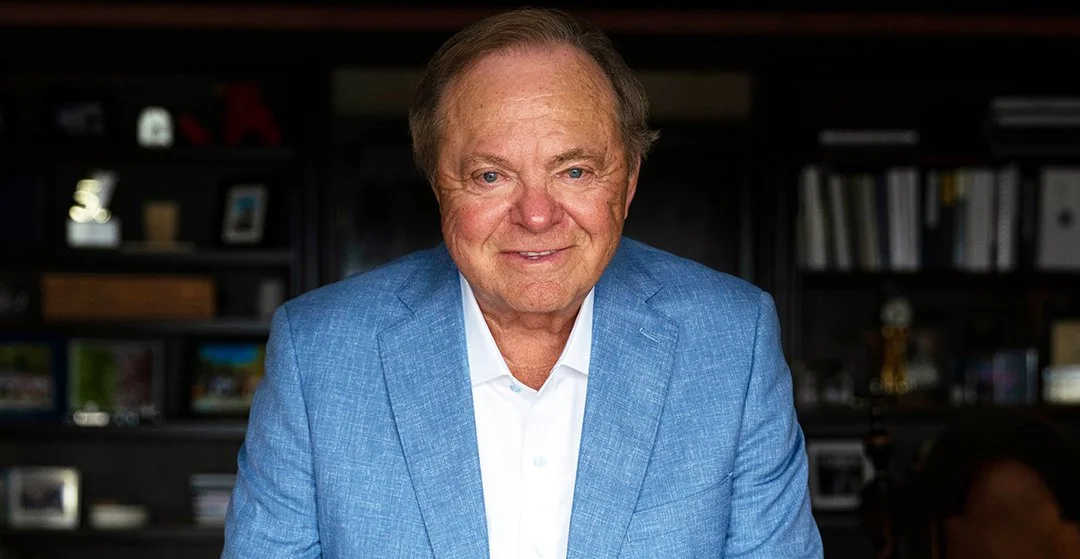
Oil and gas pioneer Harold Hamm has helped steer America to energy independence
By the Editors
This article appears in the Winter 2026 issue of the Coolidge Review. Request a free copy of a future print issue.
“Harold Hamm personifies the true heroic entrepreneur,” the investor Charles Schwab has said. Schwab is not guilty of hyperbole.
The youngest of thirteen children born to an Oklahoma sharecropper, Hamm started his first business at age twenty, when he purchased a mud truck with borrowed money. He eventually founded Continental Resources, a leading independent oil and gas producer.
Hamm’s influence extends beyond all the jobs he has created and the energy he has produced. A pioneer in horizontal drilling, he has helped steer America to energy independence—an achievement many observers considered impossible. He also led a long fight to lift the U.S. ban on crude oil exports, which strengthened America’s economic and geopolitical position.
Hamm tells the story in his book, Game Changer: Our Fifty-Year Mission to Secure America’s Energy Independence.
The COOLIDGE REVIEW spoke with Hamm about his career, the energy industry, the importance of calculated risks, and more.
What is the biggest misconception about the energy industry?
HH: That energy—particularly oil and natural gas—is somehow inefficient or obsolete. Oil and natural gas remain foundational to modern life. Too many people overlook the technological breakthroughs, like horizontal drilling, that have enabled huge increases in U.S. production and ushered in energy independence.
Moreover, the energy industry isn’t just about profit—it’s about powering society, heating homes, fueling economies. Energy betters human lives.
What should young people understand about risk and opportunity?
HH: Somebody once told me, “The edge of the limb is where the fruit lies.” You won’t get anywhere being risk averse. I’ve taken calculated risks throughout my career, whether it was borrowing money to buy my first truck and start a business, or pressing ahead to develop oil resources in the North Dakota Bakken long after others had pulled out. Don’t be reckless, but don’t let fear of failure stop you, either. True opportunity often requires stepping into uncertainty.
What factors account for the success of Continental Resources?
HH: One is a “culture of the possible”—believing we can achieve anything through hard work, innovation, and perseverance.
Other factors include a willingness to embrace risk, a dedication to innovation and execution, and a vision of long-term impact—seeing beyond short-term challenges to focus on securing a reliable energy supply for America.
What advice would you give to Coolidge Foundation students?
HH: Seek opportunity where others see danger; don’t let fear of failure hold you back. You don’t have to be perfect—but you do have to be willing.
What has been your greatest success?
HH: I’m proud of helping lead America’s transformation into the world’s largest oil and natural gas producer. Through the innovation and advancement of horizontal drilling, we dramatically increased U.S. production—and helped the nation achieve energy independence in 2019.
My greatest success, though, is the legacy that is already being carried forward by my industry and my family. That continuity of purpose means more to me than any single accomplishment.
What has been your greatest failure?
HH: Failures don’t define you; how you respond does. When a well fails or a project doesn’t go as planned, it stings. But you must treat each setback as a data point.
From every failure I learned humility, perseverance, and the need to adapt. Don’t give up just because the first attempt didn’t work.
What policy issue matters most to you?
HH: Energy policy should support realistic, practical solutions, not ideology-driven restrictions. We need balanced energy policies that support innovation while ensuring national security and reliable, affordable energy for consumers.

This article appears in the Winter 2026 issue of the Coolidge Review. Request a free copy of a future print issue.